
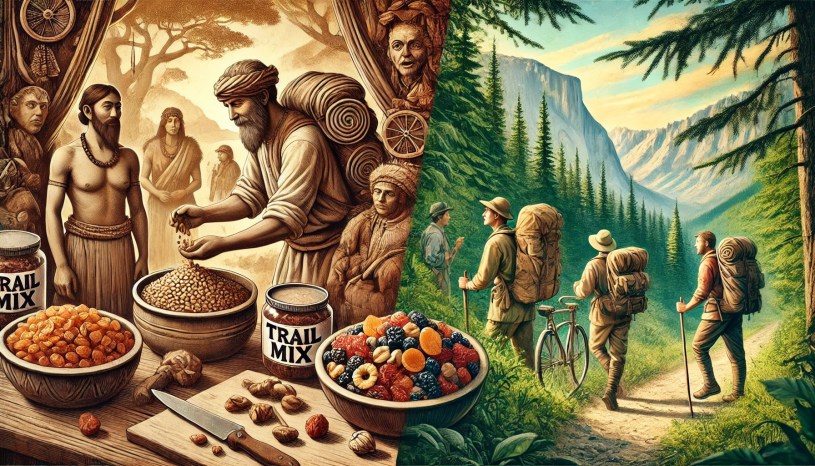
The origins of trail mix, a convenient and nutrient-packed snack, are somewhat contested, with various cultures and stories contributing to its development.
Here’s an overview of its history.
Ancient Roots
Trail mix-like snacks have existed for centuries. Ancient nomadic tribes and hunters often carried mixtures of dried fruits and nuts for sustenance during long journeys. These ingredients provided an excellent balance of calories, protein, and carbohydrates in a lightweight and non-perishable form.
European Influence
Trail mix is thought to have parallels with “studentenfutter,” a German snack translating to “student fodder.” This mix of nuts and dried fruits was popular among university students for its energy boost during study sessions.
U.S. Popularity
In the United States, the modern trail mix is often attributed to two key moments:
1920s Hikers: Trail mix was reportedly promoted as a snack by outdoors enthusiasts and hikers, including Horace Kephart, a camping guide author. His writings encouraged the use of dried fruits and nuts as a portable and nourishing snack.
Gorp: The term “Gorp,” sometimes used interchangeably with trail mix, is thought to stand for “Good Old Raisins and Peanuts.” However, this origin is debated, as some believe it was simply a slang term for “eat greedily.”
Modern Popularity
Trail mix became mainstream with the rise of the outdoor recreation movement in the mid-20th century. As hiking, camping, and backpacking grew in popularity, companies began packaging and marketing trail mix blends for convenience.
Today, trail mix is a staple snack not only for outdoor enthusiasts but also for students, office workers, and anyone seeking a quick and energizing treat. Modern versions often include chocolate, seeds, granola, and exotic dried fruits, reflecting its evolving nature.
Have an origin story you want to know more about? Send your request to contact.origin.zone@gmail.com and submit your idea and be recognized in future posts.
 The Origin Zone