
“Biting the Bullet: The Origins and Meaning Behind the Phrase”
Language has a fascinating way of carrying the echoes of history, and the expression “to bite the bullet” is a perfect example. This phrase, widely understood as accepting and enduring a difficult or unpleasant situation, traces its roots back to a time when pain was managed without the luxury of modern anesthesia.
A Painful Necessity in History
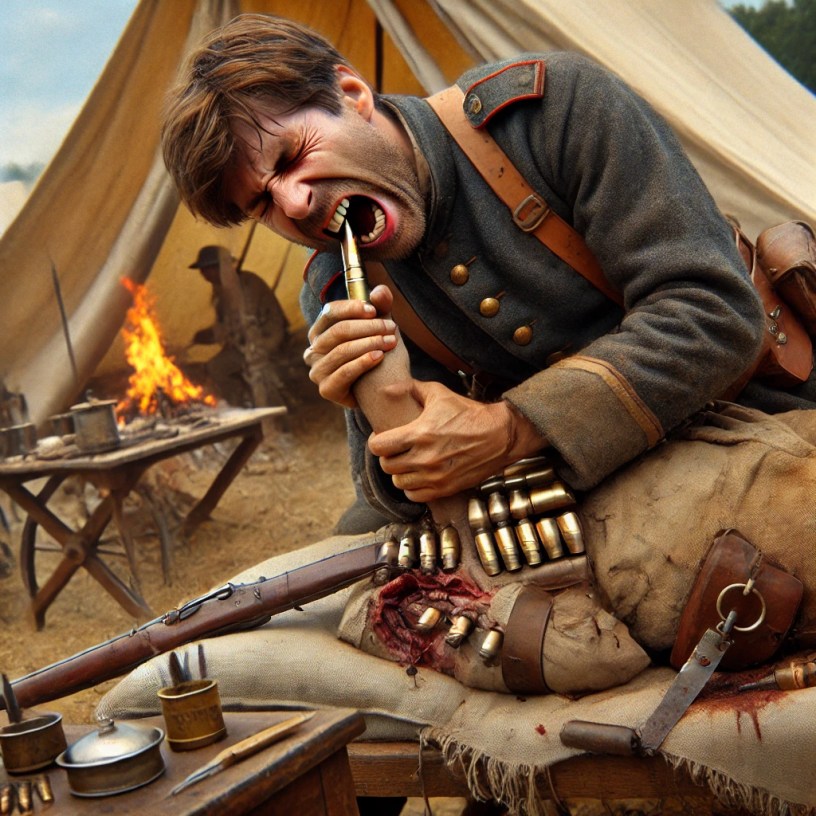
The phrase is believed to have originated during the 18th and 19th centuries, particularly in military contexts. During battlefield surgeries or other painful procedures, soldiers were sometimes given a lead bullet to bite down on. This practice served a dual purpose: it helped the patient bear the pain without screaming and reduced the risk of biting their own tongue.
Bullets were small, readily available, and durable enough to withstand the pressure of clenching teeth. Over time, the act of biting the bullet became a symbol of facing pain or hardship head-on, even when the alternative was unbearable.
Cultural Adoption and Evolution
The phrase gained broader recognition in the 19th century, partly through literature. One of its earliest recorded uses in the figurative sense appears in Rudyard Kipling’s 1891 novel, The Light That Failed. In Kipling’s work, the phrase reflects a stoic acceptance of adversity—a theme that resonated in an era marked by wars, colonialism, and social upheaval.
By the 20th century, “biting the bullet” had entered common parlance. It was no longer limited to its literal origins but evolved to describe confronting any daunting task. Whether it’s tackling an unpleasant chore, making a tough decision, or persevering through challenges, the phrase has come to symbolize grit and determination.
Modern Reflections
In today’s world, “biting the bullet” reminds us of the importance of resilience and mental fortitude. The expression encapsulates the idea that discomfort and difficulty are often necessary steps toward progress or resolution.
For instance, we might “bite the bullet” by starting a difficult conversation, undergoing a medical procedure, or taking the first step toward a major life change. While bullets no longer play a literal role in managing pain, the metaphor remains powerful—a reminder of our ability to endure and prevail.
Conclusion
The expression “to bite the bullet” is a linguistic time capsule, carrying with it the stories of soldiers, surgeons, and survivors from a grittier era. Today, it inspires courage in the face of life’s challenges, connecting us to a shared human history of perseverance.
So the next time you “bite the bullet,” remember the strength and resilience embodied in those words—and the remarkable journey of language through history.
Have an origin story you want to know more about? Send your request to contact.origin.zone@gmail.com and submit your idea and be recognized in future posts.
 The Origin Zone