
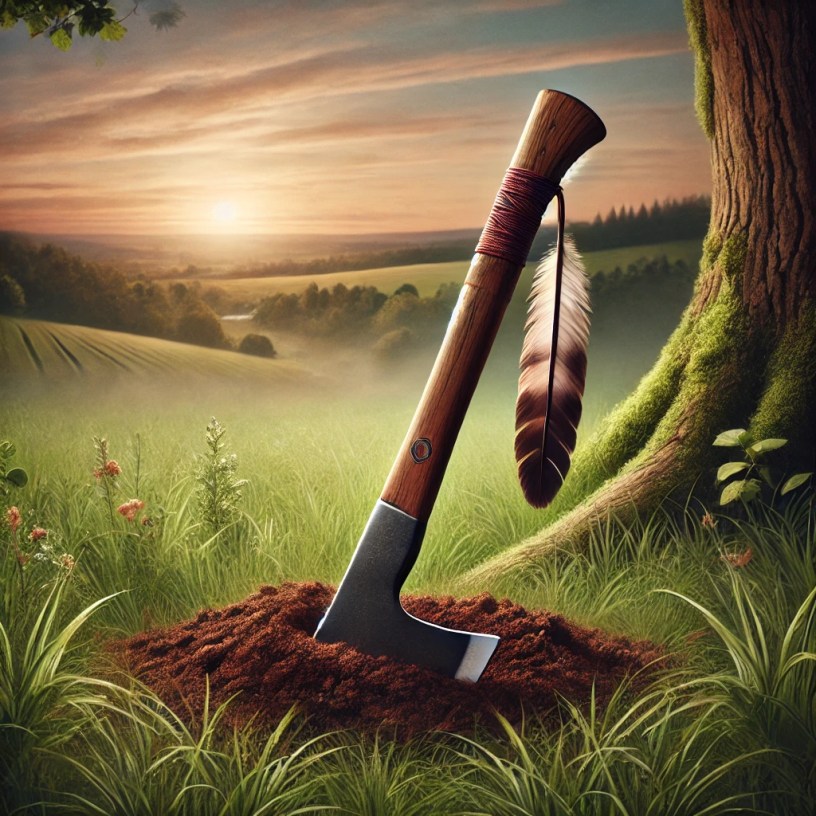
Language is full of fascinating phrases and idioms that we often use without a second thought. One such expression is “bury the hatchet”—a common way to describe making peace and letting go of old disputes. But have you ever wondered where this phrase comes from? Its origins are deeply rooted in history, specifically in the customs of Native American tribes. Let’s dig into the rich story behind this timeless saying.
The Historical Roots of ‘Bury the Hatchet’
The phrase “bury the hatchet” traces back to the practices of Native American tribes, particularly the Iroquois Confederacy. During times of conflict, warriors carried weapons like tomahawks and hatchets, symbols of war and defense. However, when tribes reached a peace agreement, they would literally bury their weapons in the ground as a symbolic gesture to end hostilities and commit to harmony.
This practice wasn’t just ceremonial—it was a physical and visual representation of trust, signaling that both parties had no intention of returning to war. By burying their weapons, they demonstrated that peace was not just spoken but solidified through action.
European Influence and Written Records
When European settlers arrived in North America, they observed and documented this tradition. Early records from the 1600s and 1700s describe peace treaties where Native Americans and colonists buried weapons as part of the agreement.
One of the earliest known references appears in a 1644 account by a French missionary, who described negotiations between warring tribes where hatchets were buried to symbolize reconciliation. Later, the expression began to appear figuratively in English texts. By the late 18th century, “bury the hatchet” was widely understood as a metaphor for settling disputes.
Modern Usage and Meaning
Today, “bury the hatchet” has transcended its literal origins and is used figuratively in everyday speech. It implies resolving conflicts, forgiving past wrongs, and moving forward without resentment. Whether it’s patching up a friendship, ending a family feud, or finding common ground in business negotiations, the phrase reminds us of the importance of reconciliation.
A Lesson in Peace and Unity
The expression “bury the hatchet” carries more than just historical significance; it offers a timeless lesson about conflict resolution. At its core, it reflects the universal human desire for peace, mutual respect, and forgiveness.
As we navigate modern disputes—whether personal, political, or cultural—perhaps we can take inspiration from this ancient practice. After all, burying the hatchet isn’t just about ending a fight; it’s about building bridges and fostering unity.
Conclusion
From its origins in Native American customs to its widespread use in modern language, “bury the hatchet” is more than just a phrase—it’s a symbol of peace and reconciliation. The next time you hear or use this expression, take a moment to appreciate its deep roots and the timeless message it carries.
So, if you’ve been holding onto a grudge, maybe it’s time to bury the hatchet and move forward. History shows us that sometimes, the most powerful act of strength is choosing peace.
Have an origin story you want to know more about? Send your request to contact.origin.zone@gmail.com and submit your idea and be recognized in future posts.
 The Origin Zone