
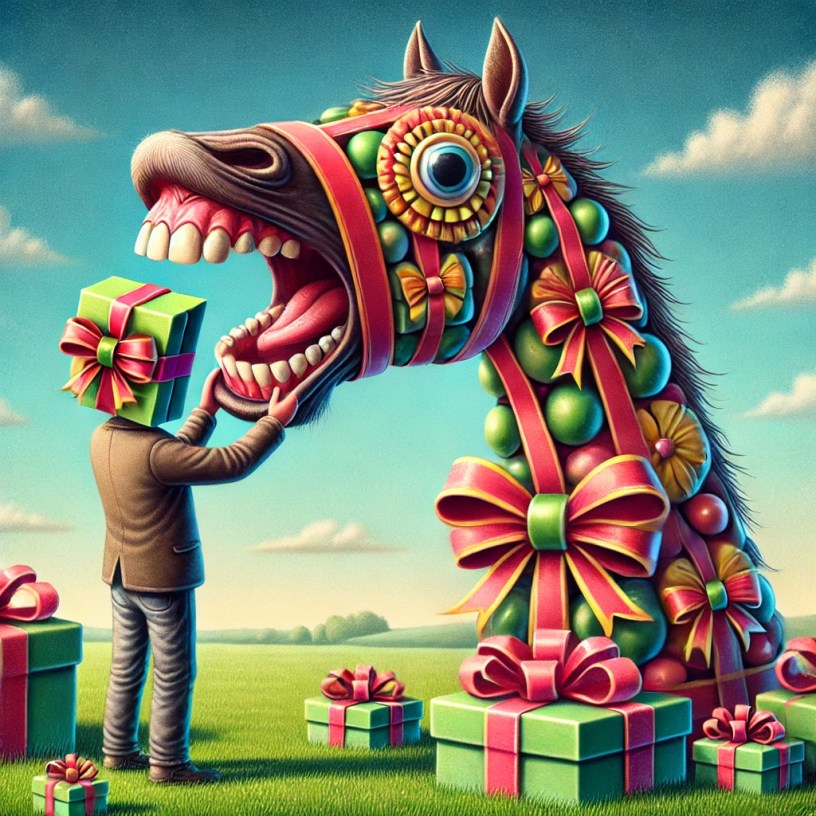
The expression “Don’t look a gift horse in the mouth” is a proverb that advises against being ungrateful or overly critical of a gift. Its origins trace back to ancient times, with variations appearing in multiple languages and cultures.
Historical Background
The phrase is rooted in the practice of inspecting a horse’s teeth to determine its age and overall health. When someone received a horse as a gift, checking its teeth could be seen as rude or ungrateful, implying dissatisfaction with the gift. Horses’ teeth grow longer with age, so examining them was a common way to assess their value.
Earliest References
St. Jerome (circa 400 AD): The earliest recorded version of the phrase appears in a letter written by St. Jerome, where he stated, “Noli equi dentes inspicere donati” (translated: “Never inspect the teeth of a given horse”).
John Heywood’s Proverbs (1546): The English version of the phrase was popularized in the 16th century by John Heywood, a writer known for compiling proverbs.
Modern Usage
Today, the saying serves as a reminder to appreciate gifts without questioning their value or quality. It’s often used in situations where someone appears to be scrutinizing or complaining about a gift or favor instead of expressing gratitude.
In essence, the phrase highlights the importance of gratitude and humility when receiving something freely given.
Have an origin story you want to know more about? Send your request to contact.origin.zone@gmail.com and submit your idea and be recognized in future posts.
 The Origin Zone