
The Origin Story of Martin Luther King Jr.
The story of Martin Luther King Jr. begins on January 15, 1929, in Atlanta, Georgia, where he was born as Michael King Jr. to Reverend Michael King Sr. and Alberta Williams King. His father later changed both their names to Martin Luther King to honor the German Protestant reformer Martin Luther, whose ideas about faith and justice profoundly influenced King Sr.’s ministry.
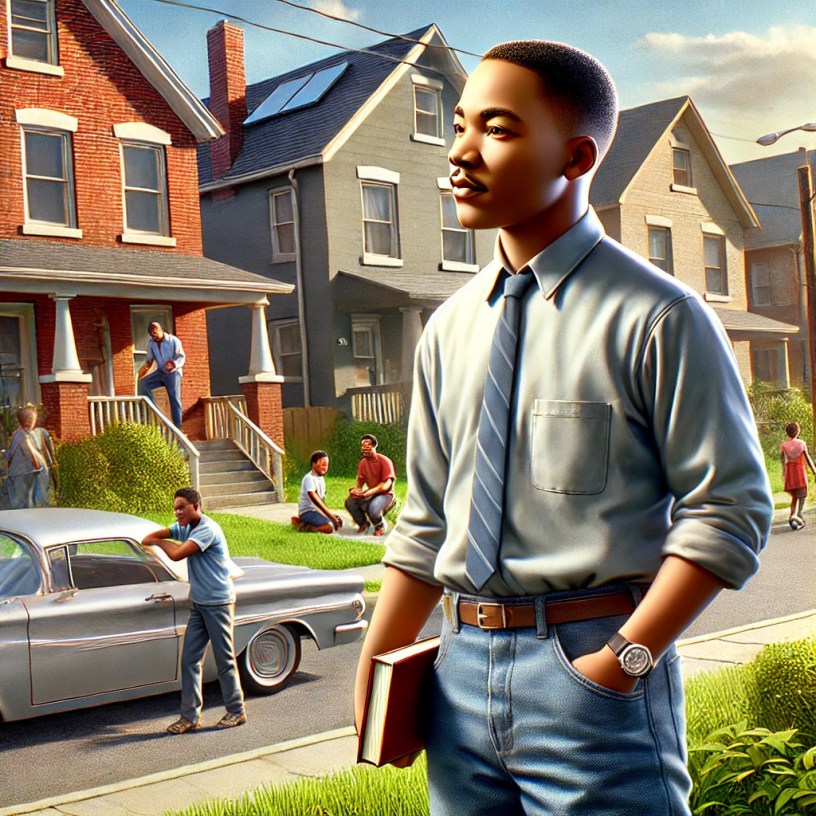
Growing up in the segregated South during the era of Jim Crow laws, young Martin experienced the harsh realities of racial inequality early in life. One pivotal moment came at age six when a white childhood friend told Martin they could no longer play together because of his skin color. This incident left a lasting impression on him and sowed the seeds of his commitment to fight for racial justice.
The Foundation of Faith and Education
King grew up in a deeply religious household, with his father serving as a pastor at Ebenezer Baptist Church in Atlanta. Religion and activism were intertwined in his family life; his father was an outspoken advocate for civil rights and challenged segregation in Atlanta. These experiences instilled in Martin a belief in the power of faith as a tool for social change.
King excelled academically, skipping two grades and enrolling at Morehouse College at just 15 years old. While initially uninterested in following in his father’s footsteps as a pastor, a sermon by Morehouse president Benjamin E. Mays inspired him to view the ministry as a means to address social injustices. After earning his sociology degree, he continued his studies at Crozer Theological Seminary in Pennsylvania and later at Boston University, where he completed his doctorate in systematic theology.
The Spark of Activism
While in Boston, King met Coretta Scott, an equally driven and passionate advocate for social change. They married in 1953, and King became pastor of Dexter Avenue Baptist Church in Montgomery, Alabama, in 1954. It was in Montgomery where King’s leadership in the civil rights movement would truly begin.
In 1955, the arrest of Rosa Parks for refusing to give up her bus seat to a white passenger ignited the Montgomery Bus Boycott. As the 26-year-old leader of the boycott, King emerged as a charismatic and eloquent advocate for nonviolent resistance. His commitment to nonviolence was inspired by the teachings of Mahatma Gandhi, whom King deeply admired.
The Making of a Movement
The success of the Montgomery Bus Boycott catapulted King onto the national stage. Over the next decade, he became the face of the American civil rights movement, leading pivotal campaigns like the Birmingham Campaign, the March on Washington, and the Selma to Montgomery marches. His iconic “I Have a Dream” speech, delivered at the March on Washington in 1963, cemented his legacy as a visionary leader dedicated to equality and justice for all.
The story of Martin Luther King Jr. is one of faith, courage, and an unyielding belief in the power of nonviolent resistance. From humble beginnings in Atlanta, he grew to become one of history’s greatest champions of human rights, inspiring generations to continue the fight for justice.
Have an origin story you want to know more about? Send your request to contact.origin.zone@gmail.com and submit your idea and be recognized in future posts.
 The Origin Zone