
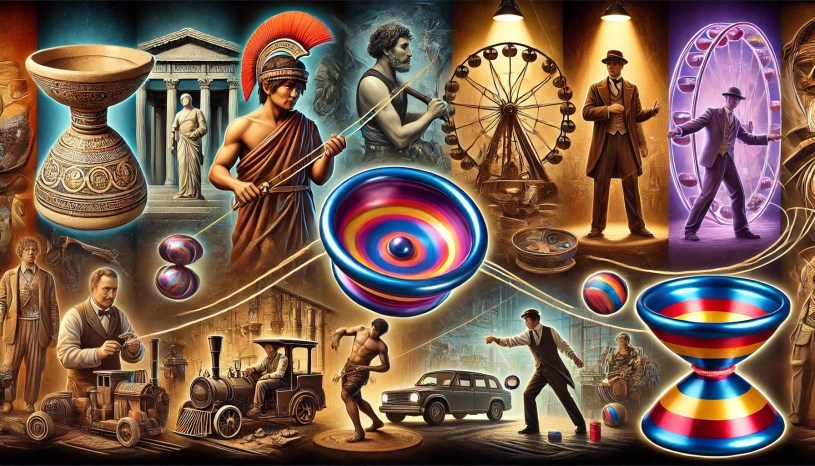

The yo-yo is one of the oldest toys in human history, a simple yet captivating invention that has entertained people for centuries. Its origin story spans continents and cultures, evolving from a tool of the past into the iconic toy we know today.
Ancient Beginnings
The earliest evidence of the yo-yo dates back to ancient Greece, around 500 BCE. Archaeologists have discovered ceramic disks resembling yo-yos, often adorned with intricate designs. These early versions were believed to be ceremonial objects, possibly offered to the gods when a child reached adulthood. Some sources also suggest that similar toys may have existed in ancient China and India, showcasing the yo-yo’s cross-cultural appeal.
The Philippine Connection
The modern yo-yo’s lineage is often traced to the Philippines, where it played a more practical role. In the 16th century, Filipino hunters and warriors reportedly used a version of the yo-yo as a weapon. These early yo-yos were larger and heavier, designed to be thrown at prey or enemies and then retrieved using the string. The term “yo-yo” itself comes from the Ilocano language, meaning “come back.”
The Rise of the Toy
The yo-yo made its way to Europe in the 18th century, where it became a popular pastime among the aristocracy. Known by names like “bandalore” and “quiz,” the toy was favored by French nobility, including Napoleon Bonaparte. By the 19th century, yo-yos gained popularity in England and other parts of Europe, solidifying their status as a universal toy.
The Modern Yo-Yo Revolution
In the early 20th century, the yo-yo underwent a transformation when Pedro Flores, a Filipino immigrant, began manufacturing yo-yos in California. In 1928, Flores opened the first yo-yo factory, introducing the toy to the American market. Shortly after, entrepreneur Donald F. Duncan Sr. purchased the rights to the toy and founded the Duncan Toy Company, popularizing the yo-yo on a massive scale. Duncan’s marketing strategies, including demonstrations and competitions, turned the yo-yo into a cultural phenomenon.
A Timeless Toy
Over the decades, the yo-yo has continued to evolve. From the introduction of the string-loop design to the advent of ball-bearing axles, technological innovations have expanded the toy’s possibilities. Today, the yo-yo is more than just a toy—it’s a sport, an art form, and a source of nostalgia for millions.
The yo-yo’s journey from ancient Greece to the modern world is a testament to its universal appeal. Simple in design yet endlessly entertaining, the yo-yo bridges cultures and generations, spinning its way through history as a symbol of play, creativity, and innovation.
Have an origin story you want to know more about? Send your request to contact.origin.zone@gmail.com and submit your idea and be recognized in future posts.
 The Origin Zone