

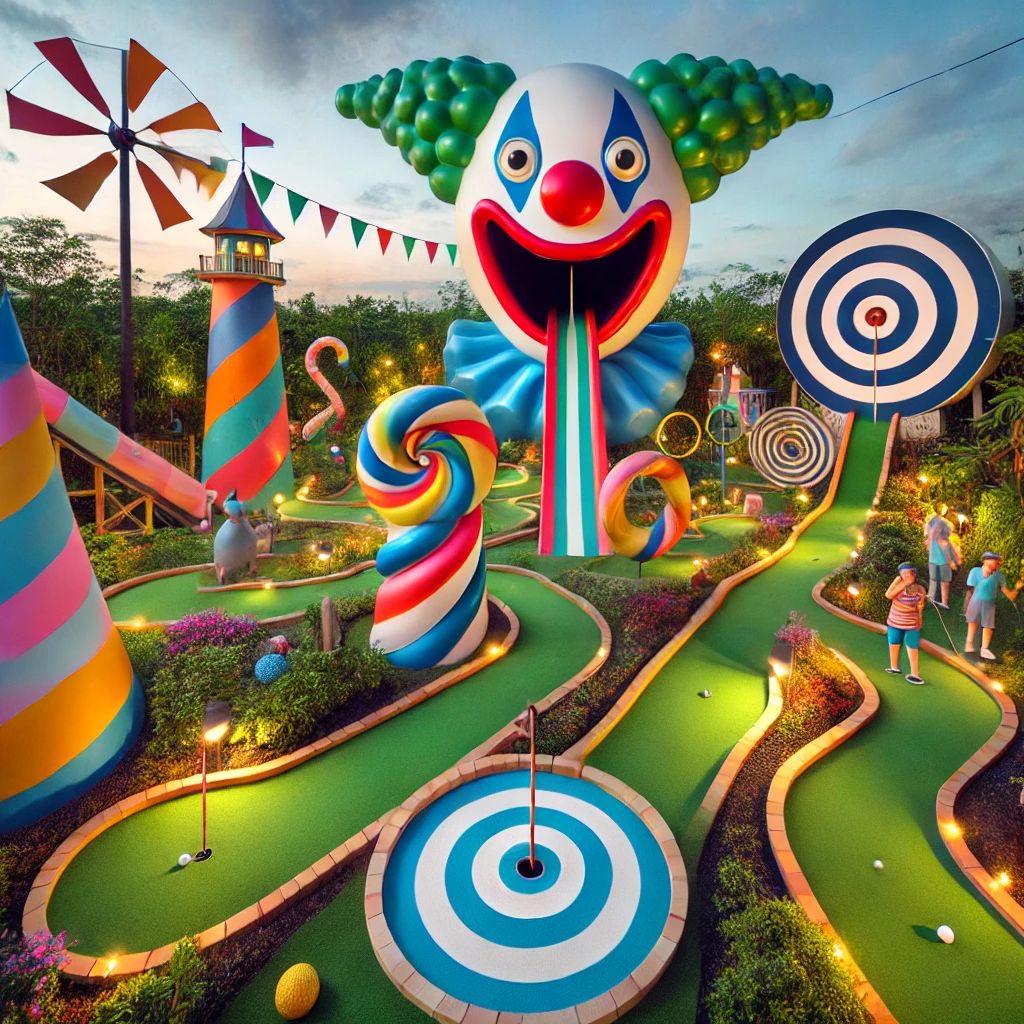
Miniature golf, often seen as a fun and quirky pastime, has an interesting origin story that dates back over a century. The history of miniature golf began in the late 19th century when the idea of creating a scaled-down version of traditional golf was born out of the desire to make the sport more accessible to everyone.
The earliest form of miniature golf can be traced to the 1890s. One of the first known miniature golf courses was established in 1916 in Pinehurst, North Carolina, at the Pinehurst Resort. This course was designed to allow women to play golf, as traditional courses at the time were deemed too challenging for them. The course was a small, simplified version of a regular golf course, where the holes were shorter and the obstacles were much easier to navigate.
However, the first true miniature golf courses, designed with artificial obstacles like windmills, tunnels, and ramps, began appearing in the 1920s. The story of one of the most famous early courses revolves around the creation of “Thistle Dhu,” a course built in 1916 by a wealthy businessman named James Barber in North Carolina. It was an 18-hole course that was a blend of creativity and simplicity, featuring various obstacles that tested the player’s skills.
Miniature golf’s boom in popularity, however, occurred during the Great Depression. As Americans sought inexpensive entertainment during tough economic times, miniature golf courses became a popular option. The whimsical nature of the courses, often incorporating playful themes like castles and gardens, made them a hit among families and individuals seeking a lighthearted activity. By the 1930s, miniature golf courses could be found all over the United States, with over 25,000 courses estimated by the mid-1930s.
The rise of miniature golf continued well into the 20th century, especially after World War II, as suburban growth spurred the construction of more courses. The appeal of the sport remained consistent due to its fun, casual atmosphere and its accessibility to people of all ages.
Today, miniature golf is an integral part of American culture, evolving with creative, often over-the-top designs while still maintaining its roots in fun and social activity. From its humble beginnings as a golf alternative for women, to its current incarnation as a popular pastime for families and tourists, miniature golf continues to be a staple of amusement parks, resorts, and leisure centers worldwide.
 The Origin Zone