
The expression “steal someone’s thunder” originates from the early 18th century and is credited to John Dennis, an English playwright and critic. The story behind the phrase is both literal and ironic.
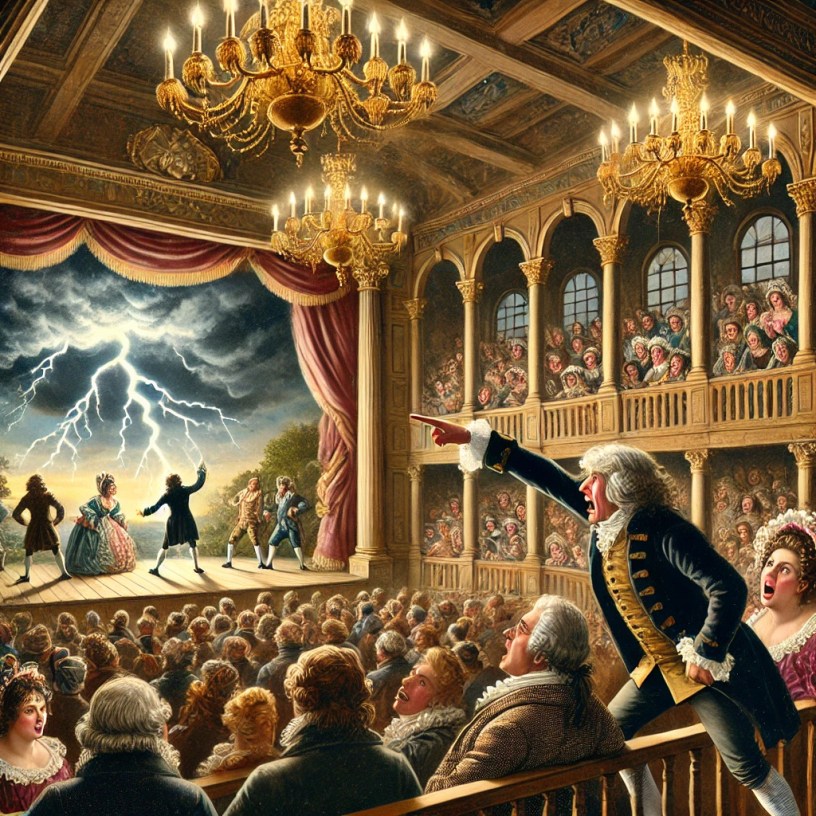
Dennis had developed a new stage effect to mimic the sound of thunder for one of his plays, Appius and Virginia, which was performed in 1709. Unfortunately, his play was unsuccessful and quickly closed. However, shortly after, Dennis attended a performance of Macbeth at the same theater and was outraged to discover that his thunder sound effect was being used without his permission.
Feeling betrayed, he allegedly exclaimed:
“That is my thunder, by God! The villains will not play my play, but they steal my thunder!”
Over time, the phrase evolved into its modern meaning: to take credit for someone else’s idea or success, or to preemptively lessen the impact of another person’s moment.
It’s an amusing twist of fate that Dennis, a relatively obscure playwright, inadvertently contributed a phrase that has far outlived his theatrical works.
 The Origin Zone