
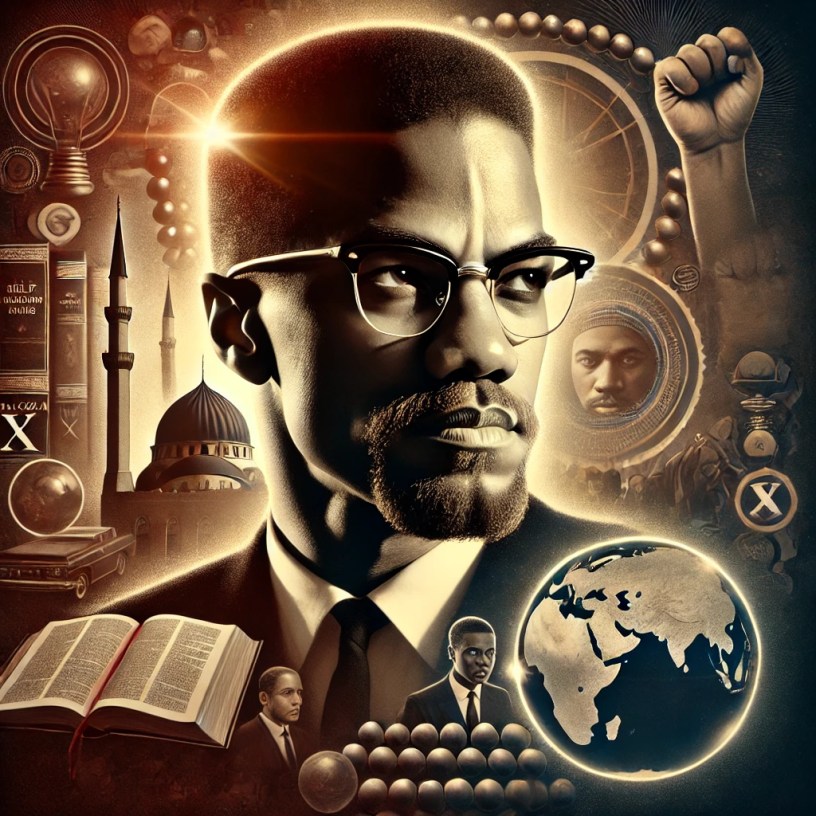
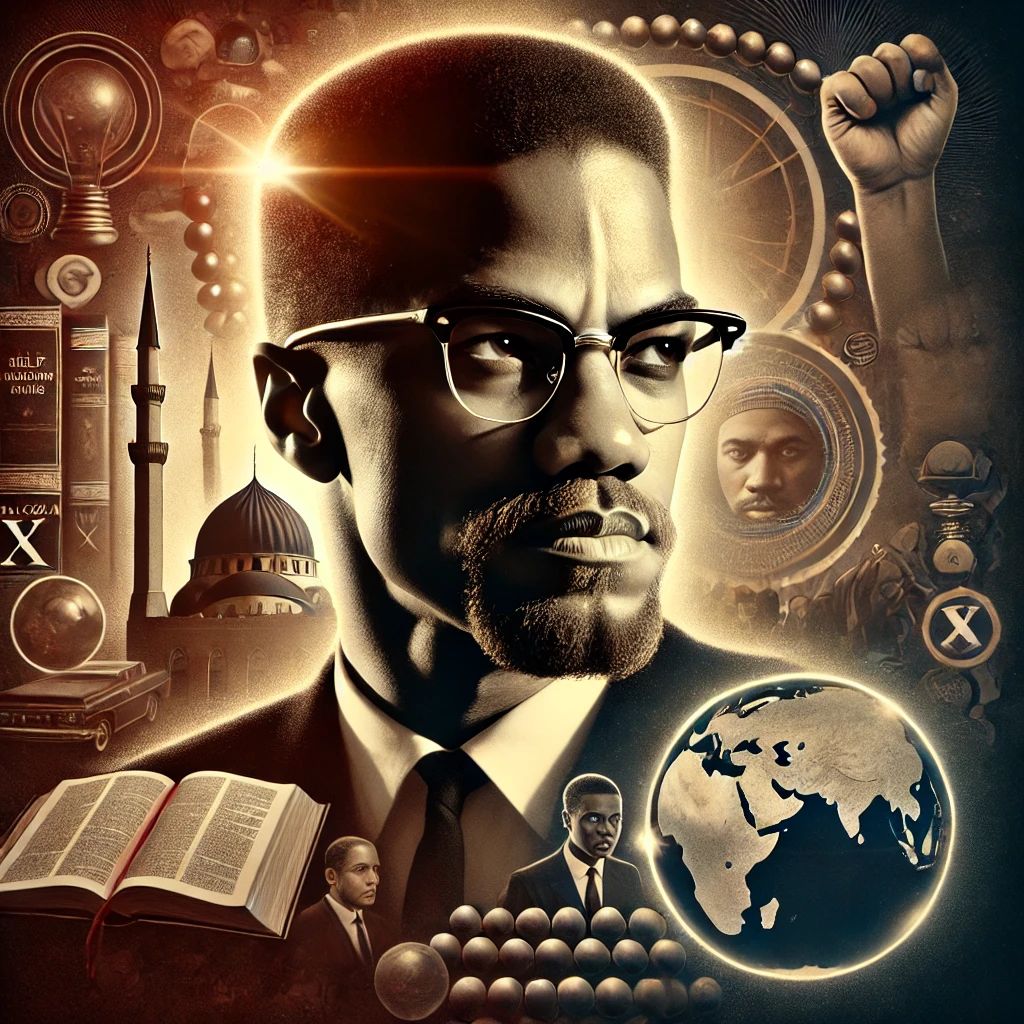
Malcolm X’s origin story is one of transformation, resilience, and radical self-discovery. Born Malcolm Little in 1925 in Omaha, Nebraska, he grew up in a world of racial violence and systemic oppression. His father, a follower of Marcus Garvey, was likely murdered by white supremacists, and his mother was later institutionalized, leaving Malcolm and his siblings to fend for themselves.
As a teenager, Malcolm drifted into a life of crime, earning him the nickname “Detroit Red” due to his reddish hair. By 1946, he was sentenced to ten years in prison for burglary. It was there that his true transformation began. Introduced to the teachings of the Nation of Islam (NOI) through fellow inmates and inspired by Elijah Muhammad, Malcolm abandoned his former self, renouncing his “slave name” and replacing it with X—a symbol of his lost African heritage.
Upon his release in 1952, he quickly rose through the ranks of the NOI, becoming one of its most powerful voices. His fiery speeches, unflinching critique of white supremacy, and message of Black self-reliance made him both a revered leader and a feared revolutionary figure.
However, Malcolm’s story didn’t stop there. After a pilgrimage to Mecca in 1964, he experienced a profound spiritual awakening. Witnessing Muslims of all races worshiping together, he embraced a more inclusive vision of Islam and human rights, ultimately breaking away from the NOI. He founded the Organization of Afro-American Unity (OAAU), advocating for global Black solidarity.
This shift made him even more of a target. On February 21, 1965, Malcolm X was assassinated in Harlem’s Audubon Ballroom, but his ideas continued to inspire generations. His autobiography, told to Alex Haley, became one of the most influential books on race, identity, and resistance in American history.
Malcolm X’s story is not just one of personal change but of radical challenge to the status quo—a journey from anger to enlightenment, from division to unity, and from revolution to legacy.
 The Origin Zone