

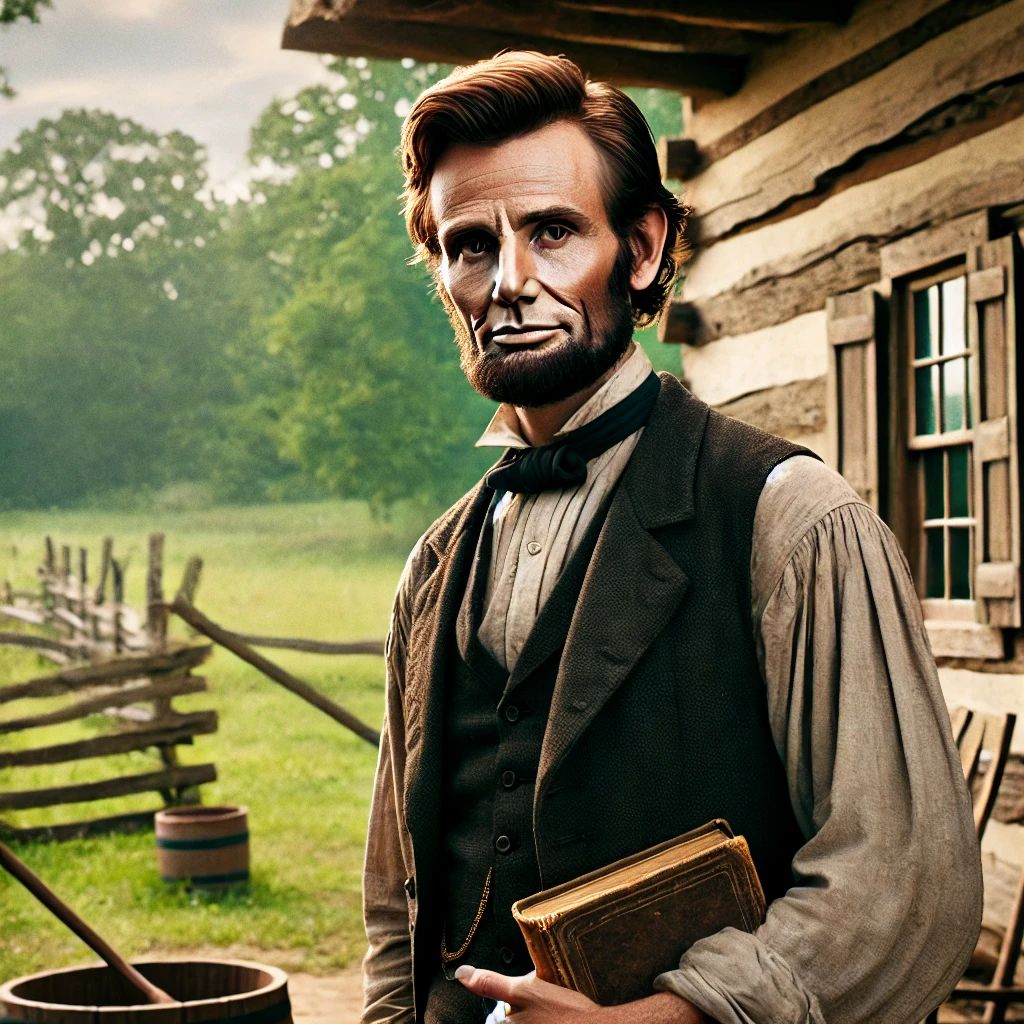
Abraham Lincoln: The Origin Story of an American Icon
Abraham Lincoln’s rise from a humble frontier boy to one of the most revered leaders in American history is a testament to resilience, intelligence, and an unshakable moral compass. His journey was shaped by hardship, self-education, and an unwavering commitment to justice and democracy.
Born in a Log Cabin
On February 12, 1809, in the backwoods of Kentucky, Abraham Lincoln entered the world in a one-room log cabin on the Sinking Spring Farm. His parents, Thomas and Nancy Lincoln, were poor pioneers who worked tirelessly to survive on the rugged frontier. Life was harsh—education was scarce, food was never guaranteed, and manual labor was an everyday necessity.
At the age of seven, Lincoln’s family moved to Indiana. Just two years later, tragedy struck when his mother died of milk sickness, a devastating disease caused by drinking contaminated milk. The loss deeply affected young Abe, but his father soon remarried, and his stepmother, Sarah Bush Johnston Lincoln, became a loving and encouraging presence in his life. She recognized Abe’s hunger for learning and supported his self-education.
A Self-Taught Scholar
Lincoln had less than a year of formal schooling, but that didn’t stop him from learning. He read voraciously, borrowing books from neighbors and reading by the dim light of the fireplace after long days of labor. He studied everything he could get his hands on—Shakespeare, the Bible, and legal texts—all of which shaped his intellect and moral philosophy.
By the time he was a young man, Lincoln had developed a reputation for storytelling, humor, and a strong sense of justice. He worked various jobs—rail-splitter, store clerk, surveyor, and postmaster—before deciding to pursue law. Despite having no formal legal education, he taught himself law by reading Blackstone’s Commentaries on the Laws of England and eventually passed the bar exam in Illinois.
From Lawyer to Leader
Lincoln’s passion for fairness and equality naturally led him into politics. In 1834, he was elected to the Illinois state legislature as a member of the Whig Party. Over the next few decades, he honed his skills as a speaker and debater, most famously in his clashes with Stephen A. Douglas over the expansion of slavery.
His speeches against slavery and his belief that the nation could not survive half-free and half-slave catapulted him into the national spotlight. In 1860, he won the presidency, setting the stage for one of the most defining periods in American history—the Civil War.
The Legacy Begins
Lincoln’s presidency was marked by turmoil, but his leadership held the country together in its darkest hour. His unwavering dedication to unity and emancipation changed the course of history. The Gettysburg Address and the Emancipation Proclamation cemented his place as a champion of freedom.
Though his life was tragically cut short by assassination in 1865, Lincoln’s legacy lives on. His journey from a poor farm boy to the 16th President of the United States is a story of perseverance, self-education, and an unrelenting belief in the American dream.
 The Origin Zone