

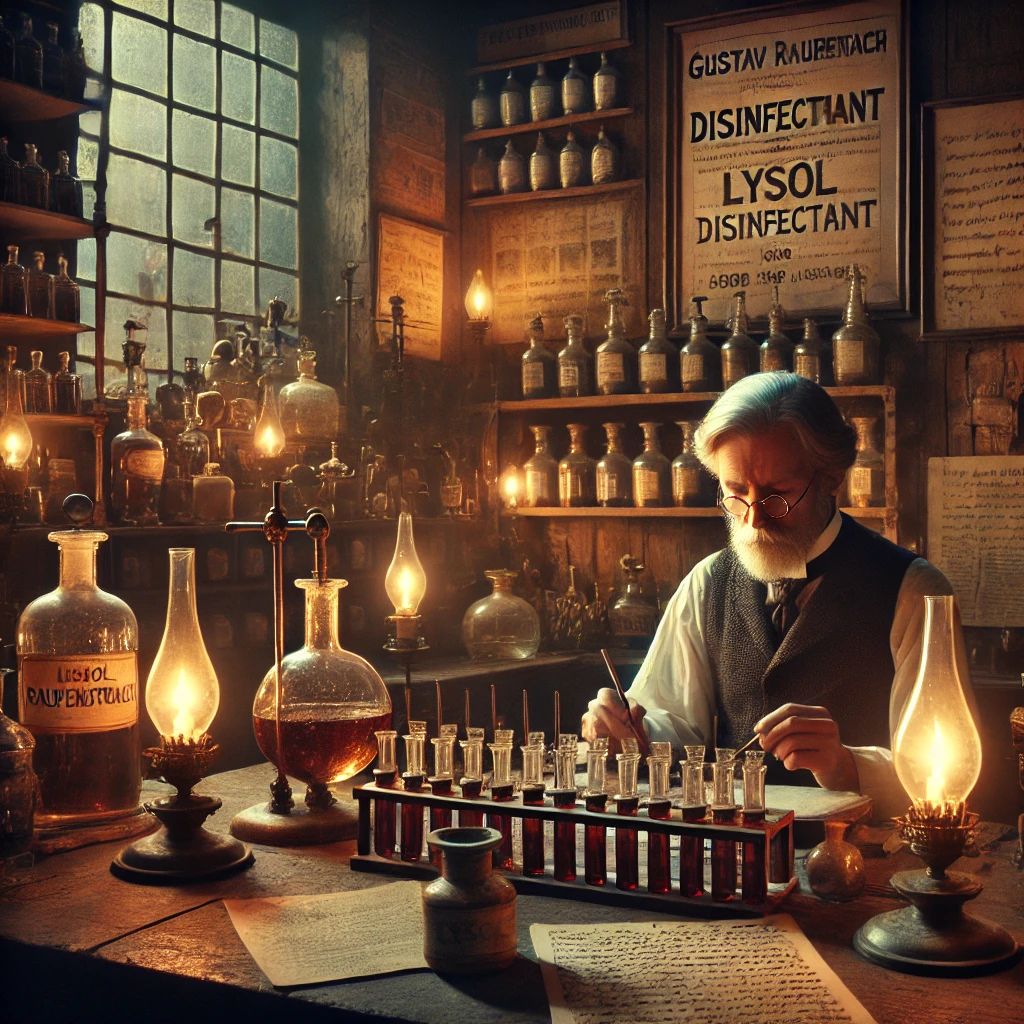
Lysol has an interesting origin story that dates back to the late 19th century. It was originally developed in Germany in 1889 by Dr. Gustav Raupenstrauch in response to a deadly cholera epidemic. At the time, sanitation was poorly understood, and waterborne diseases like cholera were rampant. Raupenstrauch created Lysol as a powerful disinfectant to help control the spread of bacteria and improve public hygiene.
In the early 20th century, Lysol was marketed for various uses, including cleaning household surfaces and even as a medical antiseptic. Shockingly, in the 1920s and 1930s, Lysol was also promoted as a feminine hygiene product, though this use was later deemed unsafe.
Lysol gained mainstream popularity in the U.S. during the Spanish flu pandemic of 1918, when it was used as a disinfectant to curb the spread of the virus. Over the decades, it became a household staple for cleaning and sanitization.
Today, Lysol is a globally recognized brand owned by Reckitt and is widely used for household cleaning, disinfection, and germ protection. Its history reflects how our understanding of hygiene and public health has evolved over time.
 The Origin Zone