
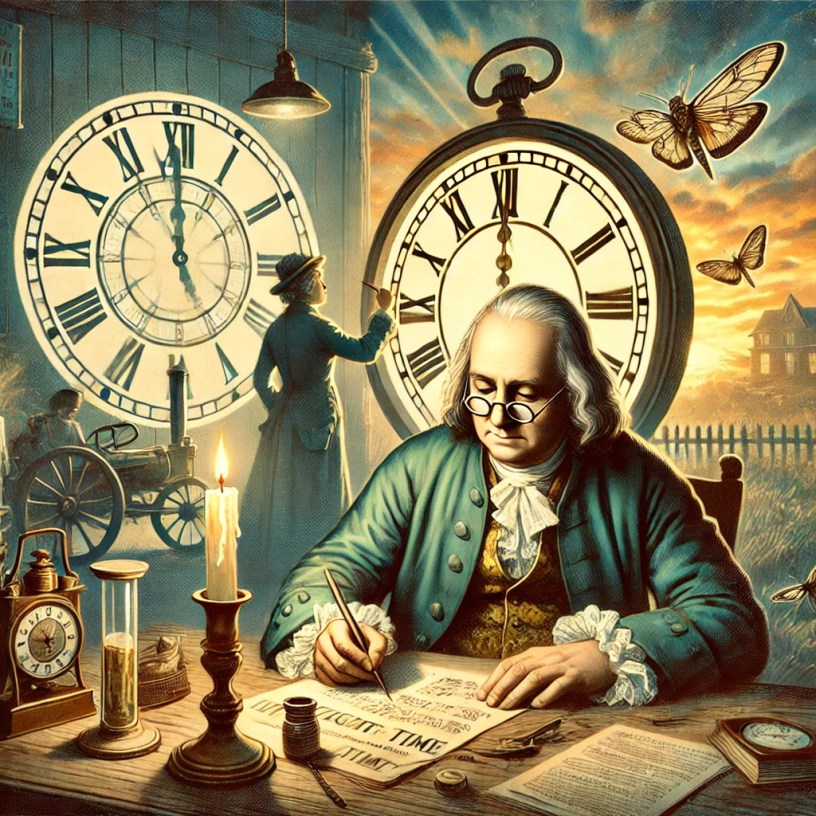

The Curious Case of Daylight Savings: A Story of Time Travel in Our Daily Lives
Twice a year, millions of people around the world become time travelers—no DeLorean or flux capacitor required. As the clocks spring forward or fall back, we collectively shift our schedules by an hour, all thanks to a concept known as Daylight Saving Time (DST).
A Brilliant (or Confusing) Idea?
The idea of adjusting clocks to make better use of daylight isn’t new. It dates back to Benjamin Franklin, who humorously suggested in 1784 that people could save on candles by waking up earlier. However, it wasn’t until World War I that Germany became the first country to officially adopt DST to conserve energy. Other nations, including the U.S., soon followed.
Springing Forward, Falling Back
Each year, DST begins in spring, usually in March or April, when clocks are moved one hour ahead, effectively stealing an hour of sleep but giving us longer evenings. In autumn, typically in October or November, we gain that hour back when clocks “fall back.”
The Great Debate
Supporters argue that DST helps conserve energy, reduces traffic accidents, and encourages outdoor activities. However, critics claim it disrupts sleep, affects health, and has little impact on modern energy savings. Some places, like Hawaii and most of Arizona, have opted out altogether.
Will DST Ever End?
There have been growing movements to abolish or make DST permanent. In the U.S., some states have passed legislation to keep daylight time year-round, but federal approval is needed. The debate continues: should we stick with the twice-a-year clock change or pick a permanent time?
As we adjust our clocks yet again, one thing is clear—time may be constant, but our relationship with it is anything but! What do you think? Should DST stay or go?
 The Origin Zone