
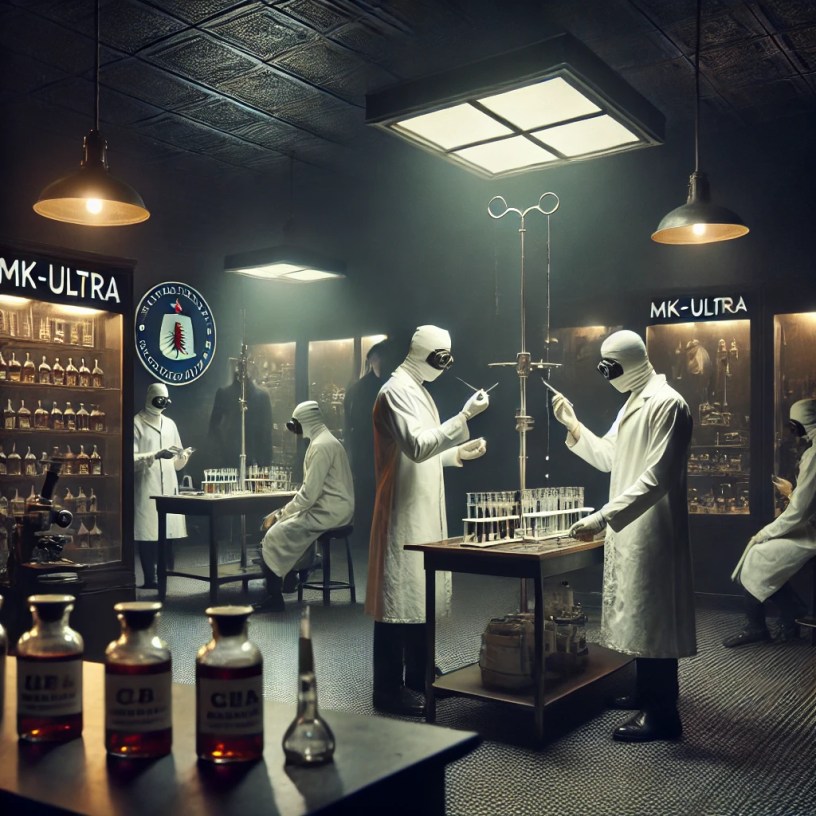
MK-Ultra, the infamous CIA mind control program, had its origins in the early years of the Cold War, when paranoia about Soviet and Chinese brainwashing techniques ran high. Officially launched in 1953, the program was the brainchild of Sidney Gottlieb, a chemist and spymaster who believed that altering the human mind through drugs, hypnosis, and other experimental methods could give the U.S. a strategic advantage.
The roots of MK-Ultra trace back to World War II, when intelligence agencies were already experimenting with truth serums to interrogate enemy spies. After the war, the CIA was particularly alarmed by reports of American prisoners of war in Korea who appeared to have been “brainwashed.” This fear fueled the agency’s desire to crack the code of mind control.
Under the directive of then-CIA Director Allen Dulles, MK-Ultra officially began as a classified research program exploring the use of drugs—especially LSD—as tools for interrogation, manipulation, and even assassination. The project quickly expanded, involving unwitting subjects, including military personnel, mental patients, prisoners, and even civilians. Some of the most notorious experiments took place in universities, hospitals, and even brothels, where subjects were secretly dosed with psychedelics and observed.
While MK-Ultra was officially shut down in 1973, its legacy lingers, especially in the revelations about government overreach, ethical violations, and the potential long-term psychological effects on its victims. Many documents were destroyed, leaving much of its history shrouded in mystery and speculation. The program remains a dark chapter in the history of U.S. intelligence, a cautionary tale of what happens when science and secrecy collide without oversight.
 The Origin Zone