
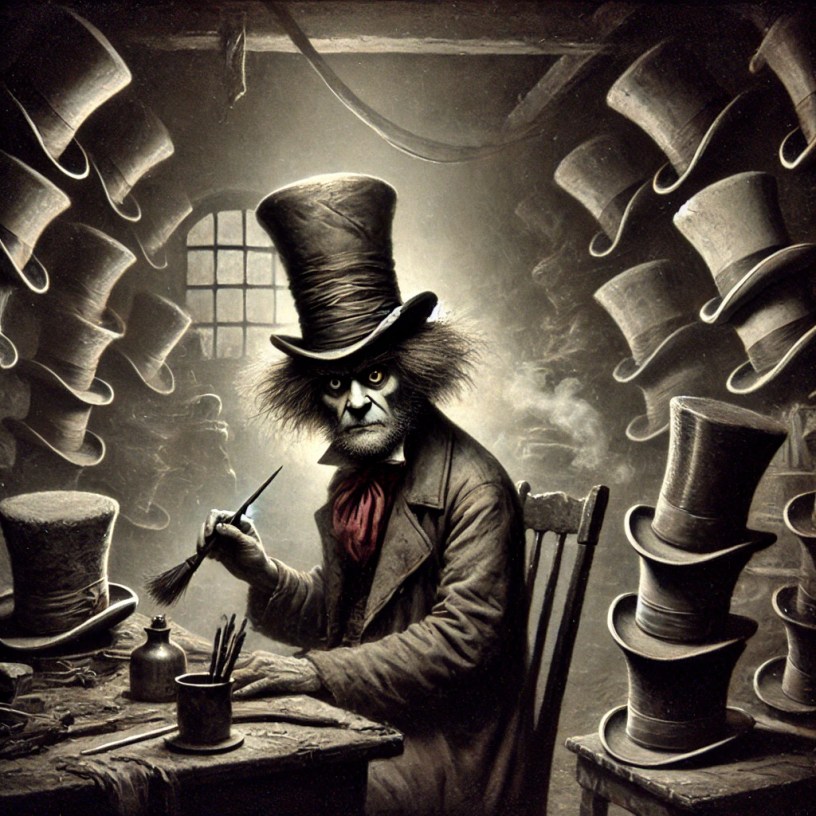

The Origin of the Expression “Mad as a Hatter”
The phrase “mad as a hatter” is commonly used to describe someone who appears eccentric, insane, or highly unpredictable. While many people associate it with the Mad Hatter character from Alice’s Adventures in Wonderland by Lewis Carroll, the expression predates the book and has a fascinating history.
The Mercury Connection: Hat-Making and Poisoning
The most widely accepted origin of the phrase comes from the 18th and 19th-century hat-making industry. Hatters (hat makers) commonly used mercury nitrate in the felting process to treat animal furs. Prolonged exposure to mercury vapors led to a neurological disorder known as erethism or mad hatter disease, which caused symptoms such as:
Tremors (known as “hatters’ shakes”)
Mood swings and depression
Hallucinations and delusions
Slurred speech and memory problems
These symptoms made many hatters appear “mad” or mentally unstable, leading to the expression mad as a hatter.
Early Uses of the Phrase
The phrase was in use before Carroll’s famous book. One of the earliest known printed references appeared in an 1829 issue of Blackwood’s Edinburgh Magazine:
“Mad as a hatter and twice as dangerous.”
Another early use is found in The New Zealand Herald (1873), where it was described as a well-known English saying.
Lewis Carroll and the Mad Hatter
Lewis Carroll’s Alice’s Adventures in Wonderland (1865) introduced the world to the eccentric Mad Hatter, though Carroll never explicitly used the phrase mad as a hatter. Instead, the Cheshire Cat tells Alice:
“In that direction,” the Cat said, waving its right paw round, “lives a Hatter: and in that direction,” waving the other paw, “lives a March Hare. Visit either you like: they’re both mad.”
Though Carroll’s character was not directly based on mercury poisoning, he may have drawn inspiration from the expression or from real-life hatters.
Modern Legacy
Today, mad as a hatter remains a popular idiom for describing someone who behaves in a wildly eccentric or erratic manner. Though mercury is no longer used in hat-making, the historical connection between the phrase and the dangers of industrial exposure is a stark reminder of the unintended consequences of early manufacturing processes.
So next time you hear mad as a hatter, you’ll know it’s more than just a whimsical Wonderland phrase—it’s a reflection of history, industry, and the effects of mercury poisoning.
 The Origin Zone