

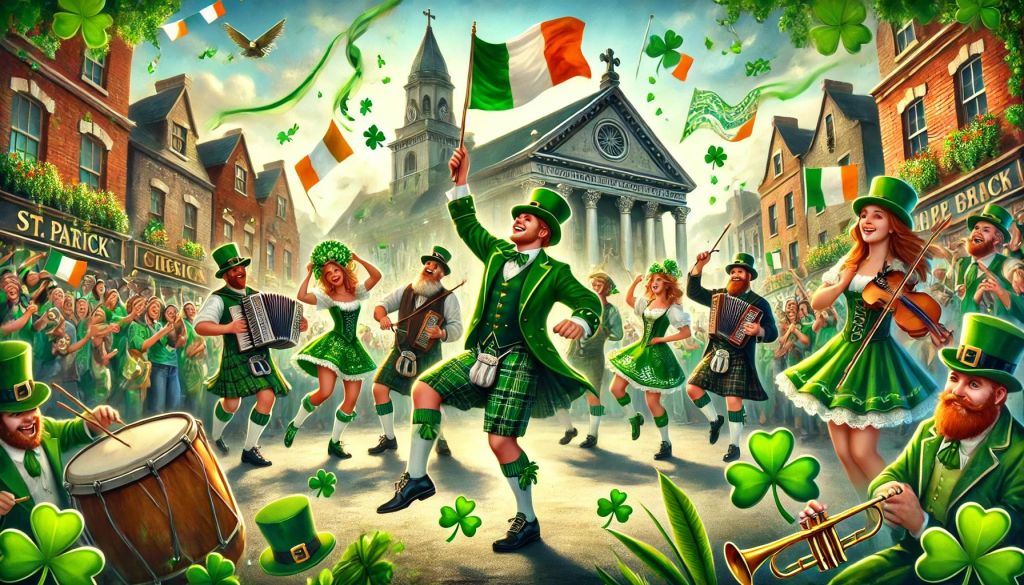
Every year on March 17th, people around the world celebrate St. Patrick’s Day with parades, green clothing, and festive gatherings. But beyond the shamrocks and leprechauns, the holiday has a rich history rooted in Irish heritage, religious tradition, and the legacy of one man—St. Patrick.
Who Was St. Patrick?
St. Patrick, the patron saint of Ireland, was born in the late 4th or early 5th century—not in Ireland, but in Roman Britain. His birth name was likely Maewyn Succat, and he was born into a wealthy family. However, his life took a dramatic turn when he was kidnapped by Irish raiders at the age of 16 and sold into slavery in Ireland.
For six years, Patrick worked as a shepherd, enduring harsh conditions and isolation. During this time, he turned to Christianity for solace and strength. Eventually, he escaped, returning to Britain and later training as a Christian missionary. But rather than staying in safety, he chose to return to Ireland—this time as a missionary—to spread Christianity.
The Missionary Work of St. Patrick
Patrick spent decades traveling across Ireland, converting the Irish people to Christianity, establishing churches, and spreading his teachings. He is credited with using the three-leafed shamrock to explain the concept of the Holy Trinity (Father, Son, and Holy Spirit) to the Irish, which is why the shamrock remains a symbol of St. Patrick’s Day.
Though legends have grown around his story—such as the myth that he drove all the snakes out of Ireland (there were never any native snakes to begin with)—his influence on Irish culture and Christianity was undeniable. Patrick died on March 17, around the year 461, and that date became his feast day.
The Evolution of St. Patrick’s Day
Initially, St. Patrick’s Day was a solemn religious holiday in Ireland, marked by church services and feasts. However, as Irish immigrants spread across the world, particularly to the United States, the celebration transformed.
In the 18th and 19th centuries, Irish immigrants in America began holding public parades to showcase their pride and heritage. Cities like Boston, New York, and Chicago embraced the holiday with large-scale festivities, including the now-famous tradition of dyeing the Chicago River green. Over time, St. Patrick’s Day became not only a religious occasion but also a global celebration of Irish culture.
How St. Patrick’s Day is Celebrated Today
Today, St. Patrick’s Day is observed far beyond Ireland. From the streets of Dublin to the pubs of New York, Sydney, and beyond, people celebrate with parades, traditional Irish music, food (such as corned beef and cabbage), and plenty
 The Origin Zone