
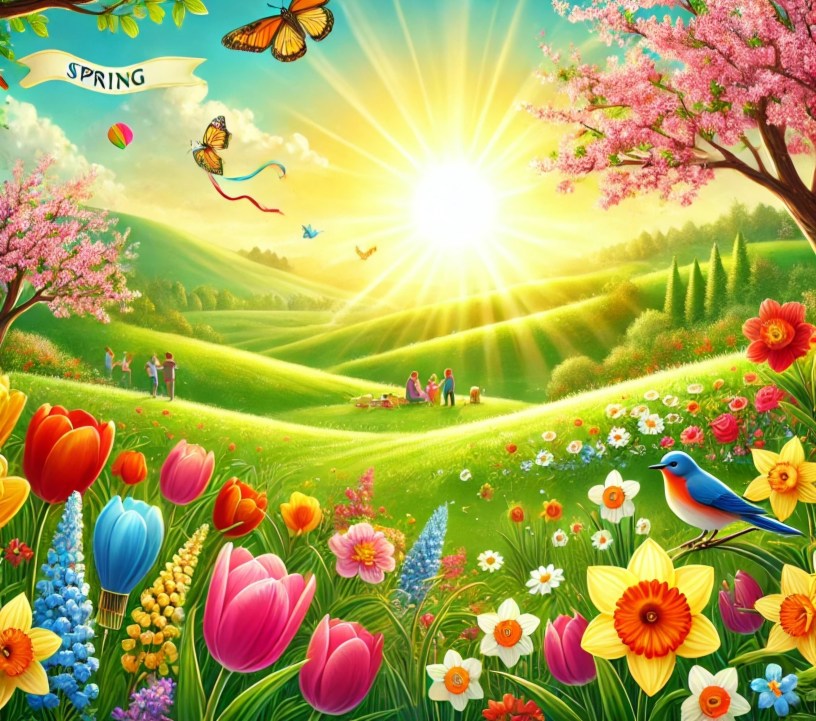
The first day of spring, also known as the spring equinox, has deep roots in history, culture, and science. It marks the moment when the Sun crosses the celestial equator, resulting in nearly equal daylight and nighttime hours across the globe. This phenomenon occurs around March 19-21 in the Northern Hemisphere and September 21-23 in the Southern Hemisphere.
Ancient Origins and Cultural Significance
The arrival of spring has been celebrated for thousands of years in various cultures:
1. Pagan and Neolithic Traditions – Ancient civilizations, including the Celts and Druids, recognized the equinox as a time of balance and renewal. Megalithic structures like Stonehenge in England and Chichen Itza in Mexico align with the equinox, suggesting their importance in early astronomy and agriculture.
2. Persian Nowruz (New Year) – Celebrated for over 3,000 years, Nowruz marks the beginning of the Persian calendar and is still observed today across Iran and Central Asia. Rooted in Zoroastrian traditions, it symbolizes rebirth and new beginnings.
3. Japanese Shunbun no Hi – In Japan, the equinox is a national holiday where families visit graves, clean their homes, and honor nature, reflecting Buddhist and Shinto influences.
4. Mayan Equinox Celebrations – At Chichen Itza, the pyramid of Kukulkan casts a serpent-like shadow along its steps during the equinox, a marvel of ancient engineering and astronomical precision.
5. Christian and Easter Connections – The equinox plays a role in determining the date of Easter, which falls on the first Sunday after the first full moon following the spring equinox.
Scientific Explanation
The vernal equinox occurs because of Earth’s axial tilt (about 23.5 degrees) and its orbit around the Sun. As the Sun moves directly over the equator, both hemispheres receive equal sunlight. After the equinox, the days grow longer in the Northern Hemisphere, ushering in warmer weather and the renewal of plant life.
Modern Celebrations
Today, the first day of spring is still a time for festivals, gardening, and symbolic fresh starts. Whether celebrated through traditional rituals, personal reflections, or outdoor activities, it remains a moment to welcome nature’s renewal.
 The Origin Zone