

The Origin Story of Rosie the Riveter Day
Every year on March 21st, we celebrate Rosie the Riveter Day, a tribute to the millions of women who stepped up during World War II to work in factories, shipyards, and other essential industries. This day honors their contributions, resilience, and the lasting impact they had on women’s roles in the workforce. But how did Rosie the Riveter become the enduring icon she is today?
The Birth of an Icon
During World War II, as men were drafted into military service, the U.S. faced a severe labor shortage. To keep industries running, the government launched an aggressive campaign encouraging women to take on jobs traditionally held by men. The campaign featured posters, advertisements, and radio broadcasts promoting the idea that women were just as capable of working in manufacturing, welding, engineering, and other skilled trades.
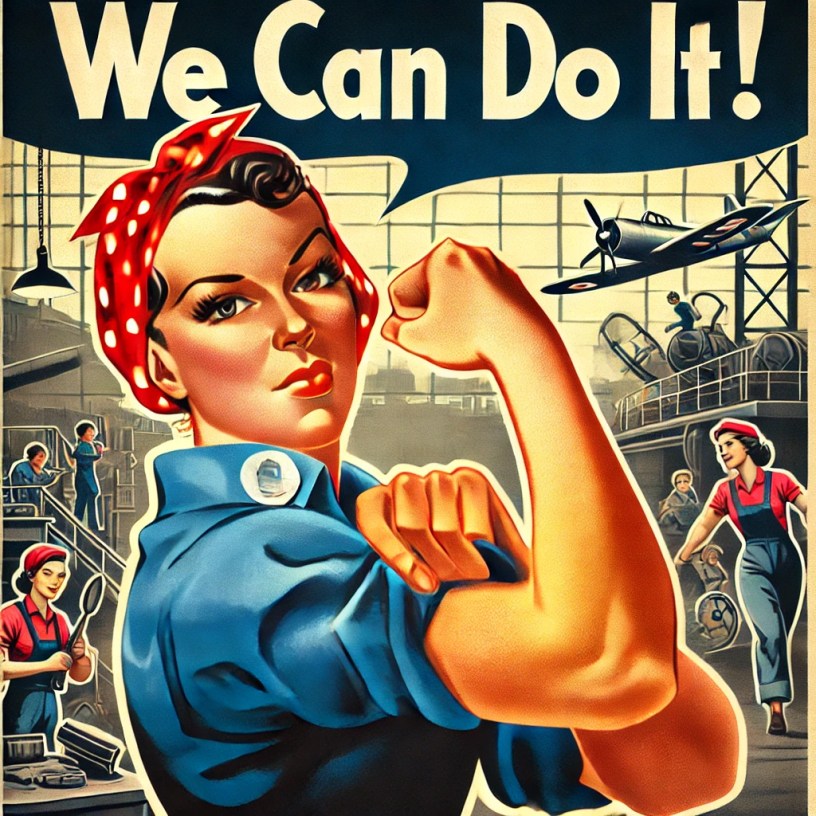
One of the most famous images to emerge from this era was “Rosie the Riveter.” While the concept of Rosie was inspired by real women working in wartime industries, the most well-known representation came from a 1943 poster by artist J. Howard Miller. The poster featured a woman in a red polka-dotted bandana, flexing her bicep with the bold slogan: “We Can Do It!”
Real-Life Rosies
Though Miller’s Rosie became the most recognizable, the inspiration for her likely came from several real women.
Rosalind P. Walter, who worked the night shift building fighter planes and later supported women’s causes.
Naomi Parker Fraley, a wartime factory worker whose photograph in a bandana closely resembled the famous poster.
Rose Will Monroe, who worked as a riveter in a Michigan aircraft factory and was featured in war-effort promotional films.
These women, along with millions of others, helped build aircraft, ships, and weapons, proving that they could handle the physical demands of industrial work just as well as men.
The Legacy of Rosie the Riveter
After the war, many women were pushed out of their jobs as soldiers returned home. However, their contributions planted the seeds for future movements advocating for workplace equality. Rosie’s legacy lived on through the women’s rights movement of the 1960s and 1970s, and today, she remains a symbol of empowerment and resilience.
In 2017, the U.S. Congress officially recognized National Rosie the Riveter Day to honor these trailblazing women. Every March 21st, we remember their courage and the doors they opened for generations to come.
“We Can Do It!”—Then and Now
Rosie the Riveter’s story is more than just history—it’s a reminder of the strength and determination of women everywhere. Whether in factories, offices, or any workplace, her spirit continues to inspire.
So, this Rosie the Riveter Day, let’s celebrate the women who paved the way and those who continue to break barriers today. We can do it!
 The Origin Zone