
The Making of a Monster: Hannibal Lecter’s Origin Story
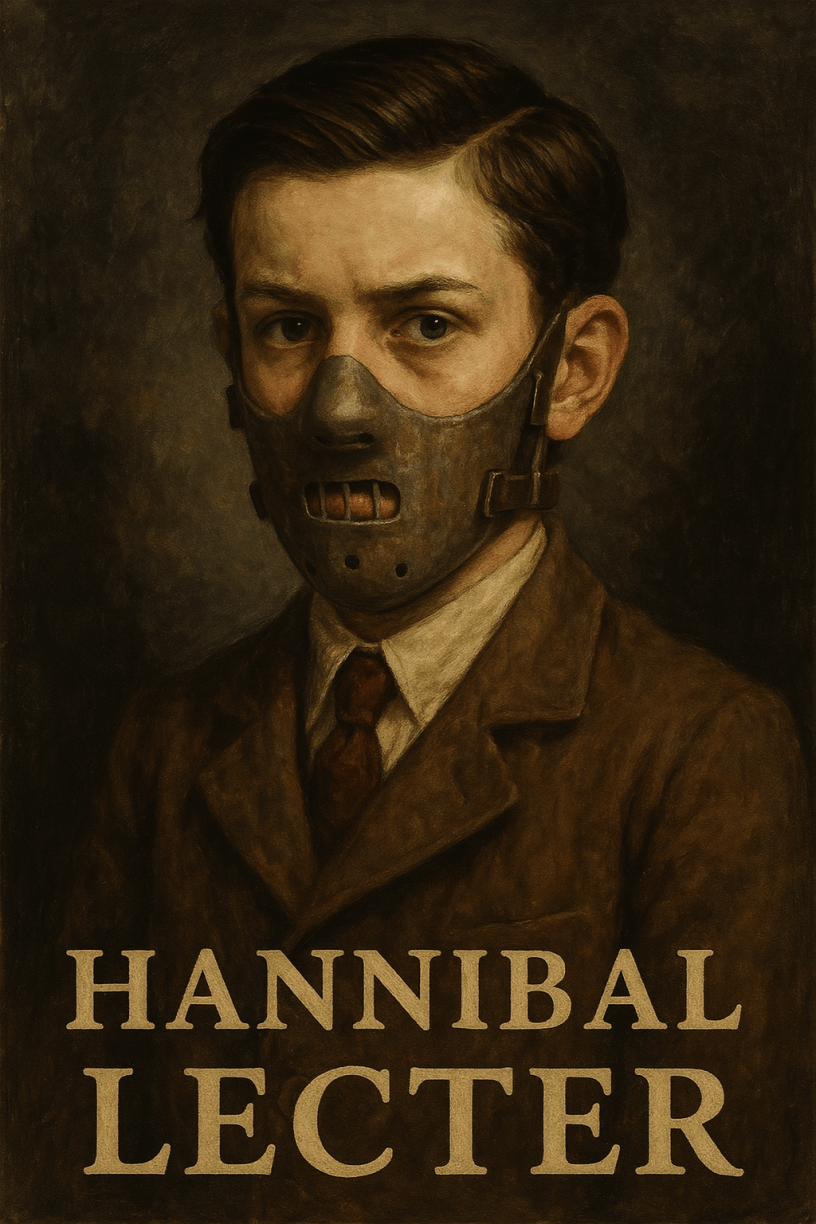
Before he was known as Hannibal the Cannibal, before he was feared by FBI agents and fascinated audiences around the world, Hannibal Lecter was just a boy—a brilliant, aristocratic child growing up in a war-torn Europe. His descent into monstrosity wasn’t instantaneous. Like many dark legends, his story began with trauma, tragedy, and a mind too sharp for its own good.
A Noble Beginning in Lithuania
Hannibal Lecter was born into nobility in Lithuania in 1933. The Lecter family lived in a grand castle on the outskirts of the forest—remote, serene, and steeped in culture. Hannibal was a precocious child, fluent in multiple languages, enamored with art, music, and philosophy. But World War II would tear that idyllic world apart.
During the Nazi invasion of the Eastern Front, young Hannibal’s life was shattered. His parents were killed in a bombing raid, and he and his beloved younger sister Mischa were left alone in the wilderness. What followed would be the first fracture in his psyche.
The Cannibals in the Woods
Hannibal and Mischa were captured by a group of war criminals—deserters and looters hiding from the frontlines. Starving and desperate, the men turned to the unthinkable: they murdered and ate Mischa. Hannibal, barely clinging to life, witnessed it all.
This horror carved something permanent into him. He would later describe the moment as the death of his soul. The trauma didn’t just scar him—it transformed him. That’s when the monster was born.
A Genius Reforged
After escaping, Hannibal was taken to France, where he was raised by a distant relative and eventually adopted. Despite his trauma, his brilliance flourished. He studied medicine, earning degrees in psychiatry and surgery. Behind the cultivated mask of civility, he harbored a growing obsession with those who had wronged him—and those who resembled them in cruelty or ignorance.
His revenge came methodically. One by one, he tracked down the men who had eaten his sister and made them suffer in ways that blended surgical precision with poetic justice. Cannibalism, for Hannibal, wasn’t just retribution—it was reclamation. An act of dominance over those who took everything from him.
The Psychiatrist with a Taste for Flesh
As an adult, Dr. Hannibal Lecter became a renowned psychiatrist, offering therapy to the rich and powerful. But beneath the façade, he was a predator. Intelligent, charming, and utterly ruthless. He didn’t just kill—he curated his murders. His victims were often rude, crass, or, in his mind, deserving of punishment. And he didn’t just kill them—he ate them.
Lecter’s philosophy became clear: the world was full of people who didn’t deserve the life they’d been given. And he—refined, intelligent, and cultured—was the perfect instrument of their correction.
The Cult Icon
Hannibal Lecter first entered popular consciousness through Thomas Harris’s novels—Red Dragon, The Silence of the Lambs, Hannibal, and Hannibal Rising. With Anthony Hopkins’ chilling portrayal in the films, Lecter became one of the most iconic villains of modern fiction. But what makes him so compelling isn’t just his violence—it’s his elegance, his intelligence, and the tragic poetry of his origin.
He’s not just a killer. He’s a mirror—a reflection of how trauma, brilliance, and rage can twist a human soul into something monstrous.
 The Origin Zone