

The Wild Origin Story of Red Bull: From Thai Tonic to Global Phenomenon
Before Red Bull gave anyone wings, it gave a sleepy Austrian businessman a jolt of inspiration in the sweltering streets of Bangkok.
The story begins in the early 1980s with Dietrich Mateschitz, a marketing executive for a German toothpaste company. On a business trip to Thailand, Mateschitz found himself jet-lagged and dragging—until he was handed a small bottle of a local energy tonic called Krating Daeng (Thai for “Red Bull”). It wasn’t bubbly, it wasn’t stylish, but it worked. Within minutes, he felt a surge of energy.
That tiny bottle sparked a billion-dollar idea.
Krating Daeng was created in 1976 by Chaleo Yoovidhya, a Thai entrepreneur who wanted to make a tonic for blue-collar workers—truck drivers, farmers, and laborers. It was a simple drink: caffeine, taurine, B vitamins, and sugar, meant to fight fatigue and boost productivity. It was popular in Thailand, but unknown elsewhere.
Mateschitz saw the potential. He approached Chaleo with a proposition: partner up and take the drink global. In 1984, they founded Red Bull GmbH, with Mateschitz holding 49%, Chaleo 49%, and Chaleo’s son Chalerm the remaining 2%.
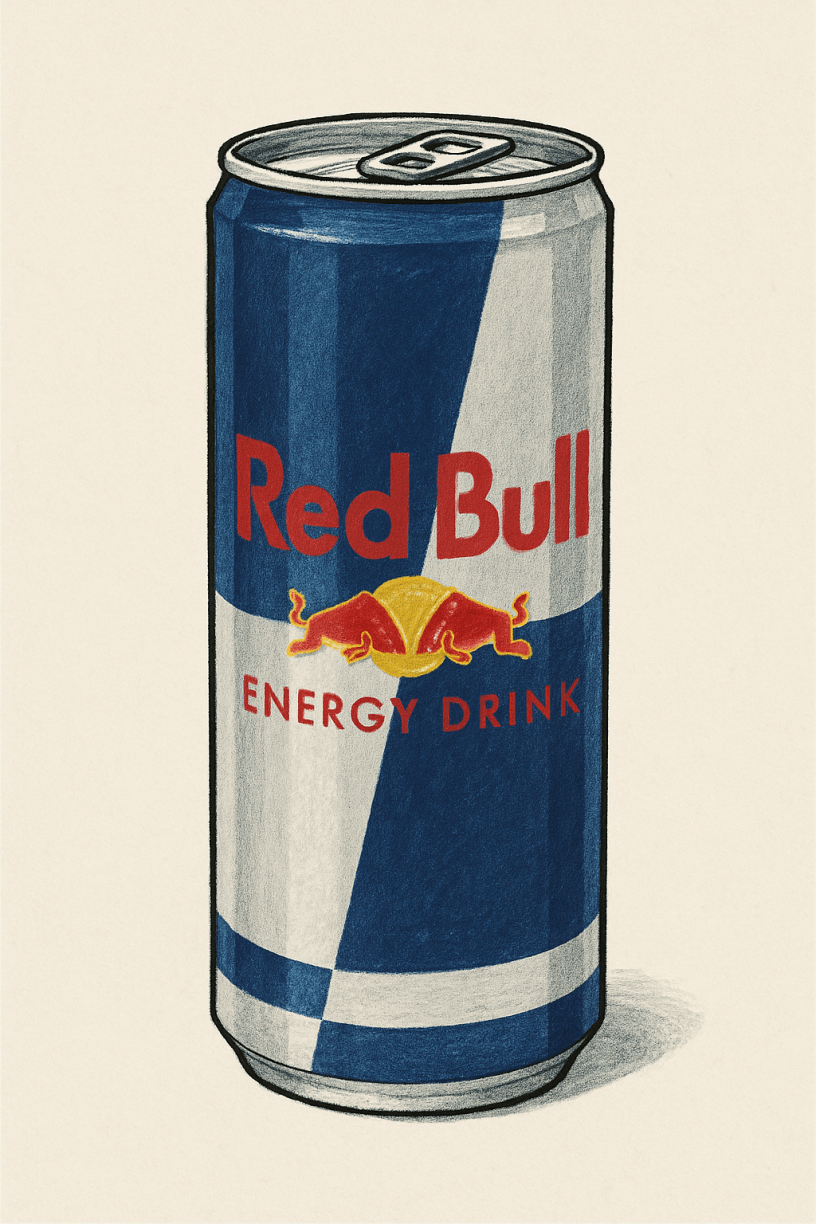
But it wasn’t a straight copy-paste. The drink was reformulated for Western tastes—carbonated, slightly less sweet—and packaged in the now-iconic slim silver-and-blue can. With slick branding and a completely new category of beverage, Red Bull Energy Drink launched in Austria in 1987.
From the start, Red Bull didn’t just sell a drink—they sold a lifestyle. Extreme sports. High-octane parties. Stunts and sponsorships. Word-of-mouth and edgy guerrilla marketing turned the weird little can into a global symbol of adrenaline and edge.
Today, Red Bull isn’t just an energy drink—it’s a media empire, a Formula 1 team, a record-breaking skydiver, and a marketing masterclass. But it all started with a jet-lagged traveler, a Thai tonic, and a hunch that the world was ready for something new.
 The Origin Zone