
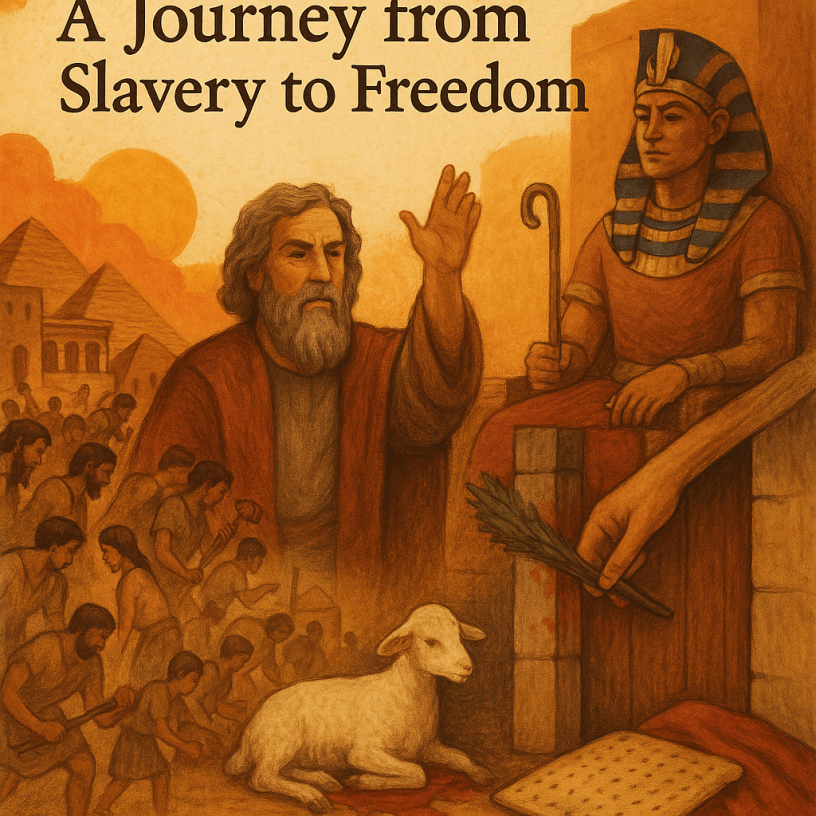

The Origin Story of Passover: A Journey from Slavery to Freedom
Long before matzah became a supermarket staple each spring, before families gathered for Seder nights and asked “Why is this night different from all other nights?”—there was a dramatic escape story, one that would shape the identity of a people for millennia.
The Setting: Ancient Egypt
The story begins in Egypt, where the Israelites, descendants of Jacob, had become a large and powerful community. But what started as a safe haven turned into centuries of oppression. The Pharaoh, fearing their growing numbers, enslaved the Israelites and subjected them to harsh labor.
As the cries of the oppressed rose to the heavens, God heard them—and set a plan in motion.
The Hero: Moses
Enter Moses. Born an Israelite but raised in Pharaoh’s palace, he was a man caught between two worlds. After a dramatic encounter with the divine at a burning bush, Moses was sent on a mission: to confront Pharaoh and demand freedom for his people.
Pharaoh, stubborn and proud, refused. What followed were ten devastating plagues that struck the heart of Egypt—water turned to blood, darkness covered the land, and locusts devoured crops. But Pharaoh remained unmoved.
The Turning Point: The Tenth Plague
Then came the final, most harrowing plague: the death of the firstborn. But the Israelites were given a way to protect themselves. They were instructed to sacrifice a lamb and mark their doorposts with its blood. When the plague swept through Egypt, it “passed over” their homes, sparing them.
That night, as wailing filled the land, Pharaoh finally relented. He ordered the Israelites to leave. They departed in haste, so quickly they didn’t have time for their bread to rise—thus, unleavened bread (matzah) became a lasting symbol of their flight.
The Birth of a Tradition
The Exodus wasn’t just a one-time event; it was the birth of a nation. And God commanded the people to remember it. Each year, they would tell the story, eat the symbolic foods, and pass the memory from one generation to the next.
That tradition lives on today in Passover, a festival of freedom, resilience, and hope. More than a holiday, it’s a reminder that even in the darkest of times, liberation is possible—and that remembering the past is essential to shaping the future.
 The Origin Zone