
The Origin Story of Palm Sunday: A Day of Joy Before the Storm
Palm Sunday marks the triumphant beginning of Holy Week, a time steeped in both celebration and solemn reflection for Christians around the world. But where did this day come from, and why do churches still wave palm branches centuries later?
Let’s rewind about 2,000 years, to a dusty road leading into Jerusalem.
The Triumphal Entry
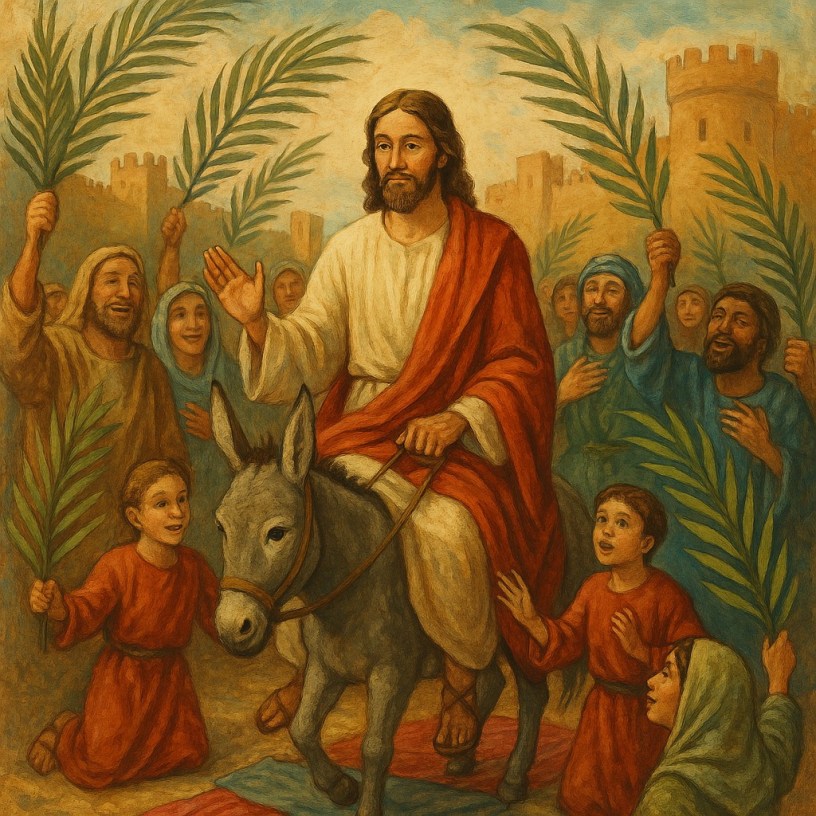
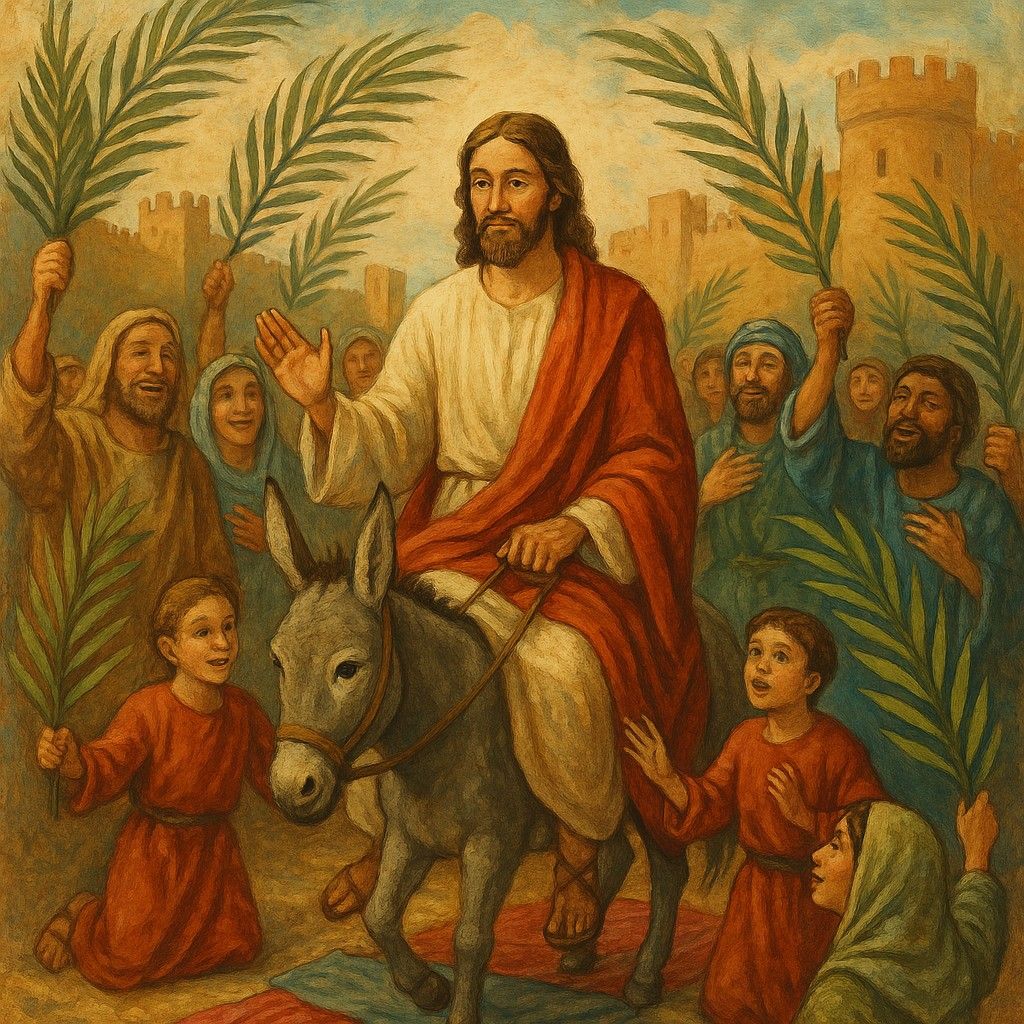
The origin of Palm Sunday is rooted in the Gospels of the New Testament—Matthew, Mark, Luke, and John all tell the story. As Jesus approached Jerusalem for the Passover festival, word had spread of his teachings, miracles, and growing following. People were beginning to believe he was the long-awaited Messiah, the King who would deliver them.
Instead of entering the city on a war horse like a conquering general, Jesus rode a humble donkey—fulfilling an ancient prophecy from Zechariah that spoke of a king coming “gentle and riding on a donkey.” This act was more than symbolic; it was a message. Jesus was a different kind of king, one who would conquer not with force, but with peace and sacrifice.
A Carpet of Palms and Praises
As Jesus rode into the city, crowds gathered. They laid down their cloaks and waved palm branches—symbols of victory and honor in the ancient world. They shouted “Hosanna!” which means “Save us now!” in Hebrew. To them, Jesus was a liberator.
But their vision of liberation was likely political and immediate—freedom from Roman rule. Jesus had a much bigger mission: to free humanity from sin and death.
From Cheers to Crucifixion
What makes Palm Sunday so poignant is that it’s a celebration shadowed by impending sorrow. In just a few days, the same crowds shouting “Hosanna” would be shouting “Crucify him.” It’s a reminder of how quickly public opinion can change—and how Jesus walked willingly into suffering, knowing what lay ahead.
The Tradition Lives On
Today, churches around the world commemorate Palm Sunday with processions, songs, and the waving of palm branches. It marks the beginning of the most sacred week in Christianity, leading up to Good Friday and Easter Sunday. The palms are often kept and later burned to make ashes for the next year’s Ash Wednesday services, bringing the story full circle.
Palm Sunday is a moment of joy, a pause before the pain of the cross, and a powerful reminder that even in celebration, we are called to follow Christ with humility, courage, and faith.
 The Origin Zone