
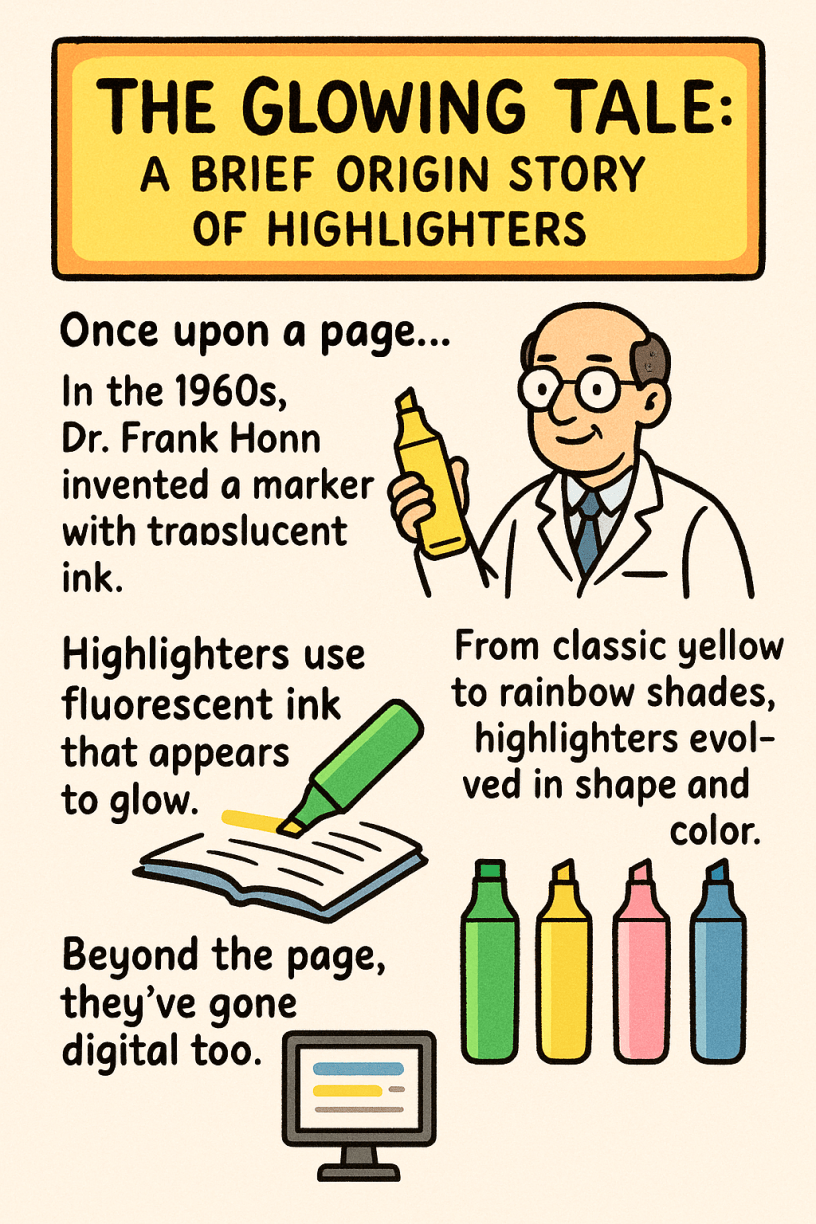
The Glowing Tale: A Brief Origin Story of Highlighters
Before TikTok productivity hacks and neon-accented study notes, the humble highlighter had a quiet yet glowing rise to fame. Like many great inventions, its origin is a mix of innovation, necessity, and a splash of bright color.
Once Upon a Page…
The story begins in the 1960s—a decade of revolutions in everything from fashion to office supplies. At a time when students and professionals alike were burying themselves in printed documents, one man had an idea: what if there were a way to light up the important stuff without obscuring the text?
Enter Dr. Frank Honn, a chemist working for Carter’s Ink Company. In 1963, he created a marker using translucent ink—one that let words peek through while still standing out. Originally dubbed the “Hi-Liter,” this fluorescent marker was an instant hit in offices, classrooms, and libraries.
How It Works (in a Flash)
Highlighters use fluorescent ink that absorbs ultraviolet light and re-emits it, making the color appear to glow. Yellow became the gold standard—not just because it’s bright, but because it’s the least likely to interfere with photocopying.
A Highlight Reel of Evolution
From classic yellow to modern rainbow shades, and from thick chisel tips to sleek pastel pens, highlighters have become more than just tools—they’re a part of our learning rituals and creative processes. Bullet journals, aesthetic notes, and colorful textbooks owe much of their charm to these little bottles of brightness.
Beyond the Page
Today, highlighters have gone digital too. From Microsoft Word’s highlight feature to Chrome extensions that let you mark up the web, the legacy lives on in glowing pixels.
So next time you reach for a highlighter, know you’re wielding a piece of mid-century magic—a simple invention that lit up the way we learn, work, and remember.
 The Origin Zone