
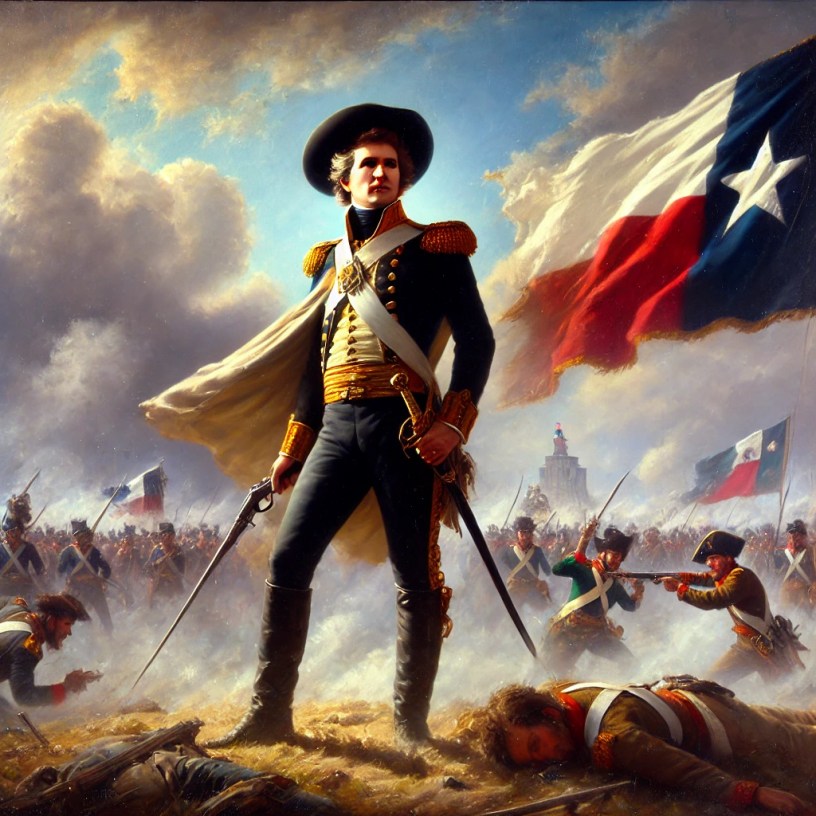
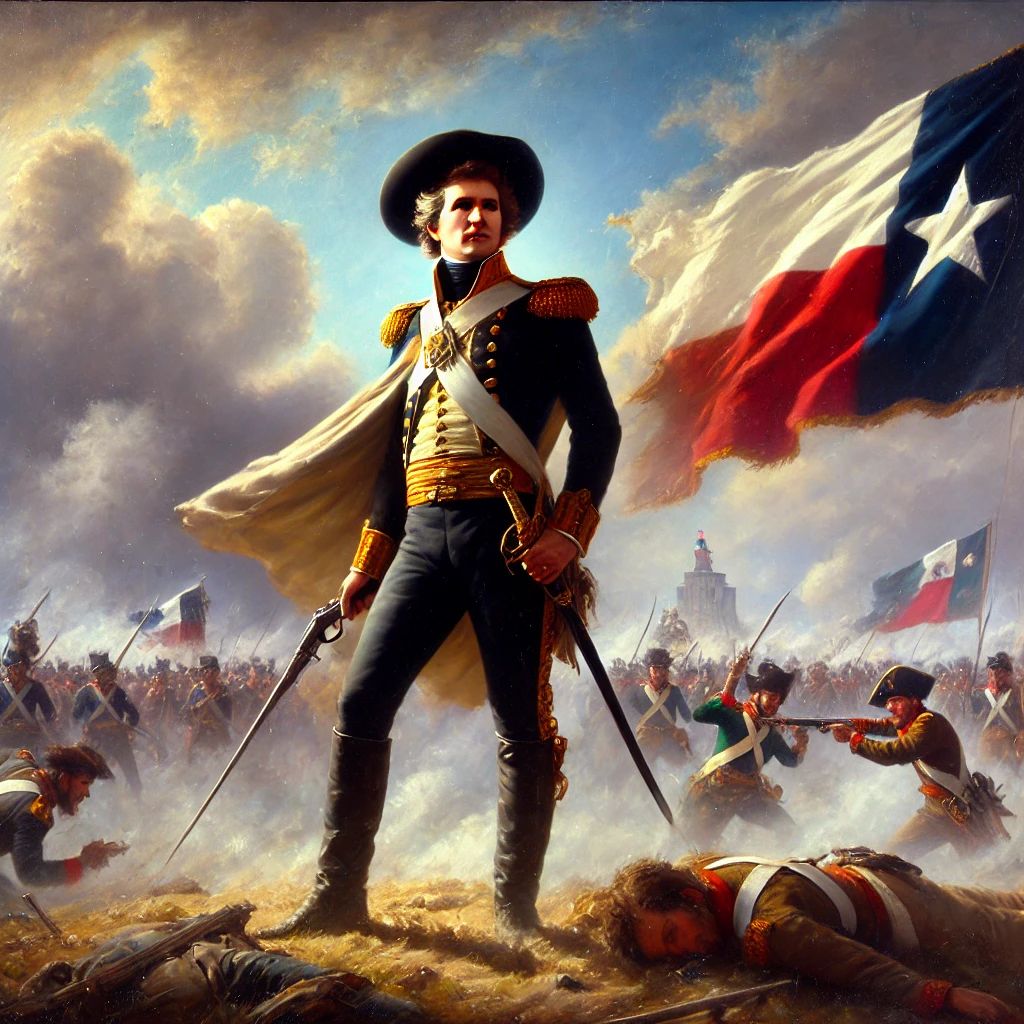
The Origin Story of Sam Houston: A Life of Destiny and Revolution
Sam Houston’s story is one of adventure, defiance, and leadership—a life shaped by the American frontier, Native American culture, and the fight for Texas independence. From his early days in Virginia to his role as the first president of the Republic of Texas, Houston’s journey was one of resilience and transformation.
A Wild Beginning in the American Frontier
Born on March 2, 1793, in Virginia, Samuel Houston was one of nine children. After his father’s death, the family moved to Tennessee, where young Sam quickly grew restless with farm life. At just 16 years old, he ran away from home and took refuge among the Cherokee Nation in present-day eastern Tennessee. He was adopted by Chief Oolooteka and given the name “Colonneh” (The Raven)—a title that would stay with him for life.
For three years, Houston lived among the Cherokee, immersing himself in their language, customs, and way of life. This experience instilled in him a deep respect for Native American culture, something that would later influence his policies as a statesman.
From Soldier to Statesman
Houston’s life took a dramatic turn when he enlisted in the U.S. Army during the War of 1812. Under the command of Andrew Jackson, he fought bravely at the Battle of Horseshoe Bend, suffering serious wounds that nearly cost him his life. His courage impressed Jackson, who became a lifelong mentor and helped propel Houston into politics.
After the war, Houston studied law and quickly rose through the ranks of Tennessee politics. By 1827, he became the governor of Tennessee, but personal tragedy struck when his first marriage ended in scandal. Distraught, Houston resigned from office and disappeared into Cherokee territory once again.
Texas and the Fight for Independence
By the early 1830s, Houston reemerged in Texas, a Mexican territory on the brink of revolution. As tensions between Texians and the Mexican government escalated, Houston became a leading voice for independence. When war broke out in 1835, he was named Commander-in-Chief of the Texian Army.
His defining moment came on April 21, 1836, at the Battle of San Jacinto. In a swift and decisive victory, Houston’s forces defeated Mexican General Santa Anna, securing Texas’ independence in just 18 minutes. Houston, wounded again in battle, emerged as a national hero.
A President, a Senator, and a Rebel Once More
Houston was elected the first president of the Republic of Texas in 1836 and later served as a U.S. senator when Texas joined the Union. However, his political career ended in defiance—he refused to support Texas’ secession from the Union at the onset of the Civil War. As a result, he was removed from office as governor in 1861.
Houston retired to his home in Huntsville, Texas, where he died on July 26, 1863. His last words were said to be, “Texas, Texas.”
A Legacy of Leadership and Independence
Sam Houston’s legacy is one of courage, leadership, and unyielding belief in the power of independence. His name lives on in the city of Houston, the largest in Texas, and in the annals of American history as one of the most remarkable figures of the 19th century.
From Cherokee adoptee to Texas revolutionary, his life was a testament to resilience, transformation, and the pursuit of destiny.
 The Origin Zone