
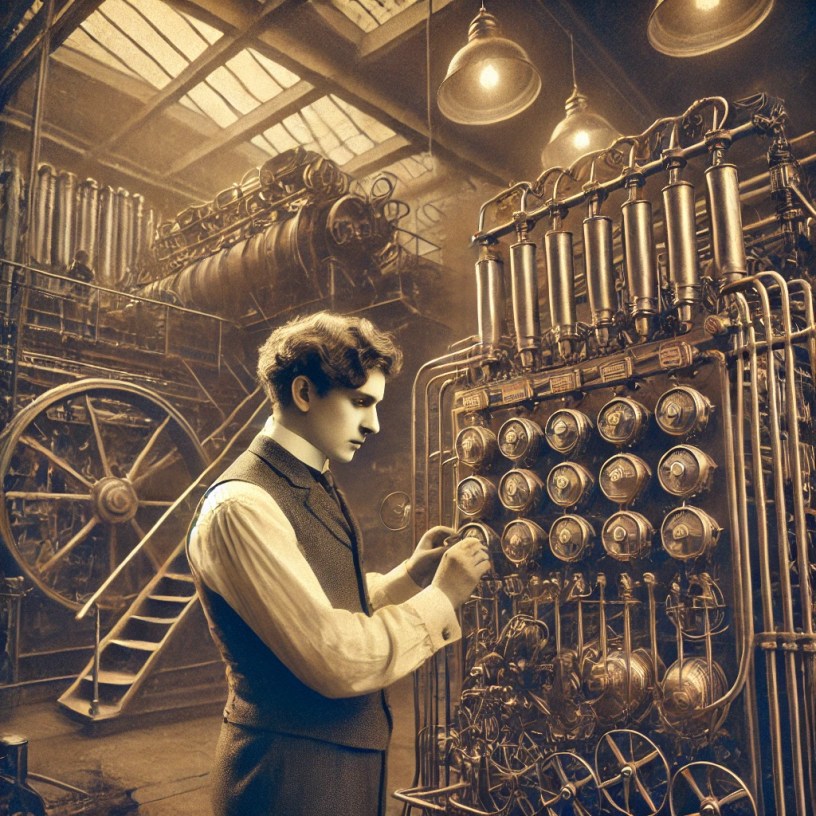

The Cool Invention: The Origin Story of the Air Conditioner
Today, air conditioning is a staple of modern life, keeping us cool in sweltering summers and maintaining comfort in homes, offices, and cars. But have you ever wondered where it all began? The story of the air conditioner is a fascinating tale of necessity, innovation, and technological advancement.
The Problem That Sparked Innovation
The origins of air conditioning date back to the early 20th century. While humans had used various cooling techniques for centuries—like Roman aqueducts and ancient Egyptian wet reeds—it wasn’t until 1902 that true air conditioning was born.
The breakthrough came from Willis Haviland Carrier, a young engineer working for the Buffalo Forge Company in New York. At the time, a printing company called Sackett-Wilhelms Lithographing & Publishing in Brooklyn was struggling with a major problem: high humidity in the summer was causing paper to wrinkle and ink to misalign during the printing process. They needed a way to control the indoor environment to ensure high-quality printing.
The Birth of Air Conditioning
Carrier, who had a deep understanding of thermodynamics, devised a system that could control temperature and humidity by cooling the air using coils filled with cold water. He installed his first cooling system in 1902, and it worked flawlessly—keeping humidity levels low and preventing paper from expanding and contracting.
His invention was revolutionary. By 1906, Carrier patented his “Apparatus for Treating Air,” and in 1915, he co-founded the Carrier Engineering Corporation, which would go on to shape the future of air conditioning.
From Factories to Everyday Life
At first, air conditioning was primarily used in industrial settings—textile mills, pharmaceuticals, and food processing plants benefited greatly from the ability to control temperature and humidity. But soon, the technology found new applications.
Movie Theaters: In the 1920s, theaters like the Rivoli in New York began installing air conditioning, making summer moviegoing a popular pastime.
Office Buildings and Department Stores: By the 1930s, businesses realized that air conditioning increased worker productivity and customer satisfaction.
Homes and Cars: The real boom came after World War II, when advances in technology made residential air conditioning affordable. The first window units hit the market in the late 1940s, and by the 1950s and ’60s, suburban homes across America were enjoying cool indoor climates.
The Legacy of Comfort
Today, air conditioning is an essential part of modern infrastructure. It has transformed urban living, made hot climates more habitable, and even revolutionized industries like healthcare and computing. Carrier’s invention not only solved a printing problem but changed the way we live and work.
Next time you step into a cool, air-conditioned room on a hot summer day, take a moment to appreciate the ingenuity of Willis Carrier—whose vision and innovation made comfort a reality.

