
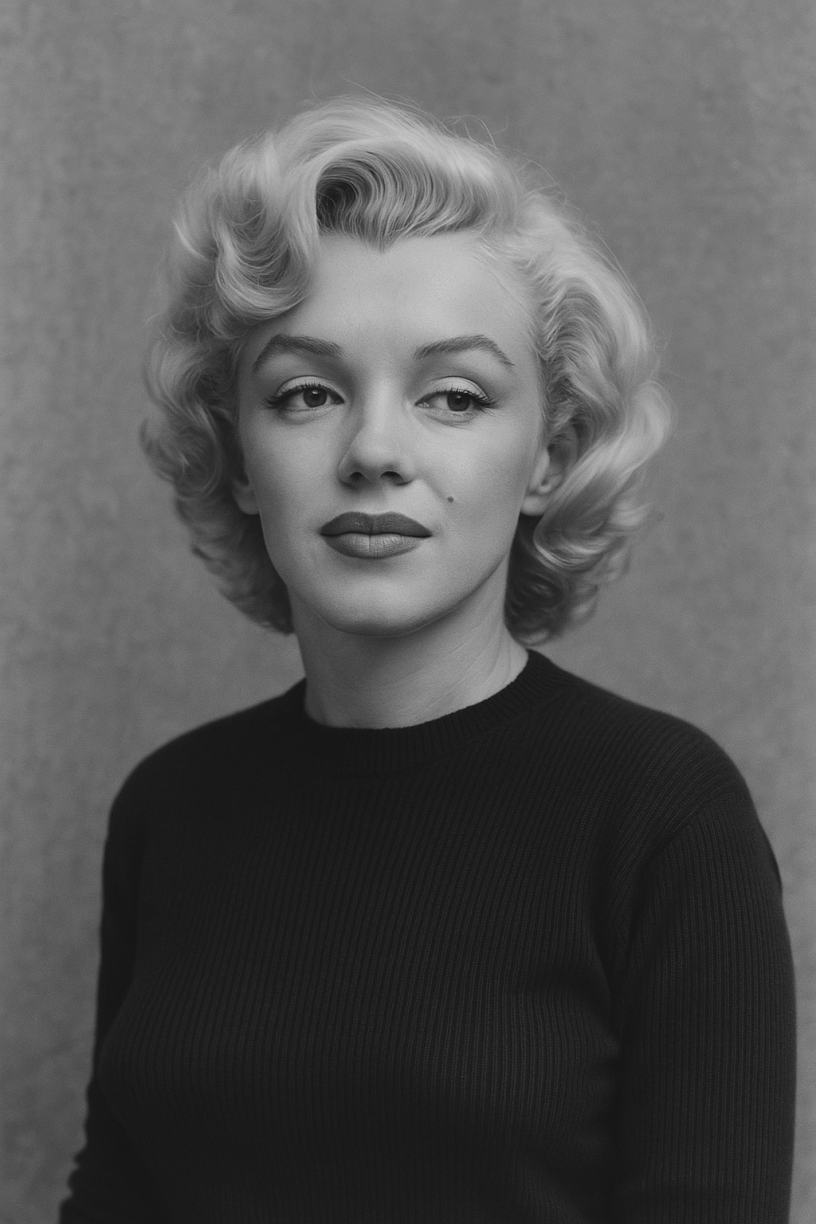

The Origin Story of Marilyn Monroe: How Norma Jeane Became a Legend
When you think of Marilyn Monroe, what comes to mind? The radiant smile, the iconic white dress billowing above a subway grate, the sultry voice singing “Happy Birthday, Mr. President”? Marilyn was all of those things, yes—but she was also so much more. Before she became a global icon, a symbol of glamour and vulnerability, she was just a girl named Norma Jeane with a difficult start and a dream in her heart.
A Fragile Beginning
Norma Jeane Mortenson (later baptized as Norma Jeane Baker) was born on June 1, 1926, in Los Angeles, California. Her mother, Gladys Pearl Baker, worked as a film cutter at RKO Pictures, but struggled with severe mental illness. Norma Jeane never knew her father and, due to her mother’s instability, spent most of her childhood in foster homes and an orphanage.
By the time she was 9, she had already experienced abuse, neglect, and displacement. Yet even in those uncertain years, there was something luminous about Norma Jeane. She was shy and soft-spoken, but her curiosity about the world—and her dream of something bigger—never faded.
A Factory Girl and a Flash of Fate
At 16, Norma Jeane married James Dougherty, a 21-year-old neighbor, to avoid returning to an orphanage after her foster family moved away. While he was deployed during World War II, she found work in a munitions factory. One day, a photographer visited the factory to take pictures of women contributing to the war effort. He was immediately struck by Norma Jeane’s photogenic face and natural charisma.
That chance encounter changed her life. The photos led to modeling gigs, and soon, Norma Jeane was on the covers of magazines, catching the attention of Hollywood agents. But there was one catch: Hollywood didn’t think “Norma Jeane” sounded like a star.
The Birth of Marilyn Monroe
With a name change suggested by studio executives—“Marilyn” after Broadway star Marilyn Miller, and “Monroe,” her mother’s maiden name—a new persona was born. Marilyn Monroe dyed her hair platinum blonde, reinvented her voice, studied acting tirelessly, and carefully crafted her image.
But the transformation wasn’t just physical. She understood the power of presence, of seduction, of vulnerability. Her screen persona was deliberate: playful, breathy, often naive, but always captivating. Underneath that was a woman striving to be taken seriously in an industry that was eager to reduce her to a stereotype.
Rising Star, Lonely Soul
Marilyn’s breakout role came in 1953 with Niagara, where she played a femme fatale. That same year, she charmed audiences in Gentlemen Prefer Blondes and How to Marry a Millionaire, proving she could hold her own alongside established stars.
Behind the scenes, however, she battled anxiety, self-doubt, and a longing to be seen as more than just a pretty face. She famously said, “I want to grow. I want to be better. You grow, we all grow, we’re made to grow. You either evolve or you disappear.”
Determined to evolve, she founded her own production company in 1955—an unheard-of move for an actress at the time—and studied method acting at the Actors Studio in New York. Despite her personal struggles, she never stopped chasing artistry and authenticity.
A Legacy Beyond the Lens
Marilyn Monroe died tragically young in 1962 at the age of 36, but her story didn’t end there. She became more than just a sex symbol—she became a cultural icon, a tragic heroine, and a symbol of the fragile line between fame and isolation.
Her life was a paradox: adored by millions yet aching for genuine love and recognition. She lit up the screen, but off-camera, she carried a loneliness that fame could never fix. And yet, it’s precisely that vulnerability that made her unforgettable.
From Norma to Marilyn: A Transformation That Shaped History
The story of Marilyn Monroe is ultimately a story of reinvention. A foster child who rose from instability to stardom. A woman who endured pain yet made the world laugh. A soul who longed to be taken seriously, even as the world saw her only as a fantasy.
Norma Jeane never truly disappeared. She lived within Marilyn—behind the makeup, beneath the glamor. And maybe that’s why she still fascinates us today: because her story, like all great legends, was heartbreakingly human.

